How smart a house can be later made — and at what cost — is decided during the structural and electrical installation phase. This page summarizes what needs to be built, area by area, while the wall is still open, and how to control it afterwards.
General deployment principles
These few rules apply to all areas. If they are present, the rest is a matter of tools; if they are absent, it is a matter of demolition.
Deployment requirements
- Indoor light switch, roller shutter switch and behind the socket recessed, 65 mm junction box.
- Behind the connector AC 230 V phase (L), neutral (N) and protective earth (PE). For a switch, it is enough to L and N — there, the PE is not required to be built.
- In the box as few ties as possible be: space is tight, the smart relay must fit. For connection stranded wire preferred.
- Just one relay behind a junction box avoid — against overheating.
- The laryngeal tubes must be over-sized: to the main trails min. 32 mm; where UTP or coax runs, the 30 mm mandatory.
- A low current (DC 12–24 V, coax, UTP) in each case in a separate conduit run from AC 230 V.
- Key devices (control panel, NVR, alarm) should preferably be on a separate, dedicated AC 230 V circuit; recommended „Type "A", max. 30 mA RCD relay.
- In the distribution cabinet at least +30% free space — for ventilation and later expansion.
- Surge protection for all UTP endpoints, both inbound and outbound, the In accordance with EPH and the lightning protection system.
- For structured cabling by default CAT6A; the cables to the contractor you have to label it during construction.
- Recommended separate IoT VLAN/SSID for smart devices.
Tools
There is no device selection at this level yet — these conditions are the same for all manufacturers. If the electrician adheres to them, you are free to decide on the control later.
Network and smart home center
The backbone of the system: the internet connection, the location of the central unit, and the network to which everything else connects. The primary, supported platform is TP-Link Omada.
Deployment requirements
- Ask the service provider for property connection point — for this the junction box must be designed.
- To the central unit room UTP and/or coax termination, and all devices communicating via UTP or coax cable should be connected here.
- Dedicated AC 230 V circuit the central unit; the central server and switch in the house should preferably be on a separate circuit.
- For the rack sized AC 230 V circuit (min. 13 A) and standard EPH binding necessary, appropriate with ventilation.
- For TVs and workstations double UTP outlet recommended.
- The central unit protected from weather and temperature fluctuations to enter the room.
Tools
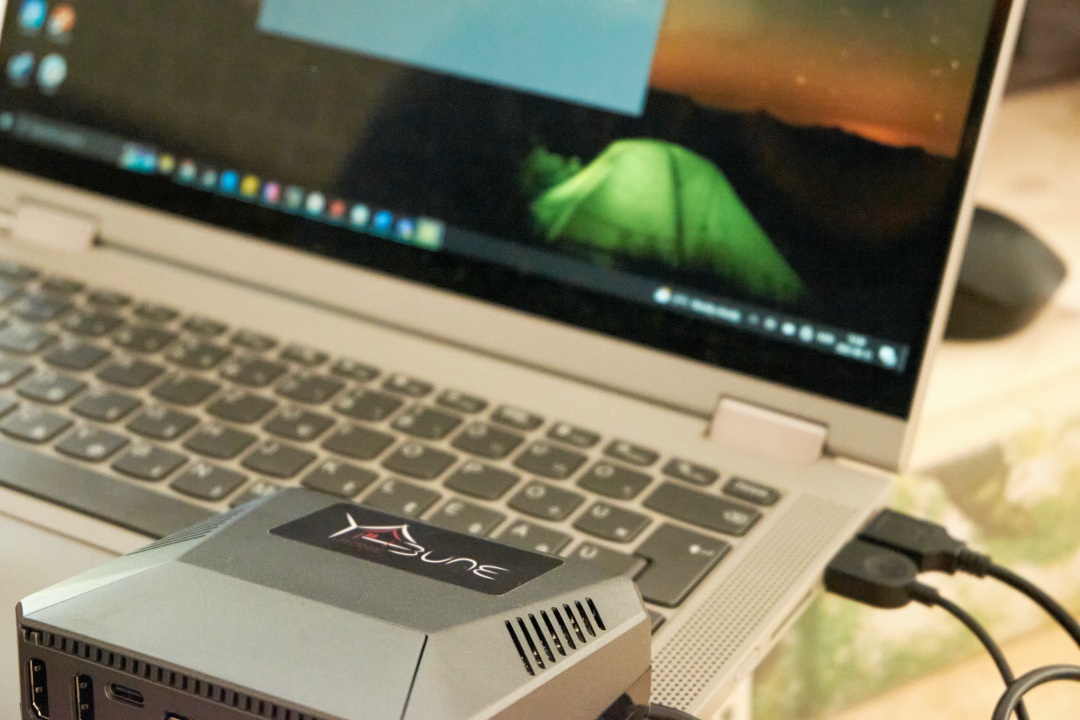
- Smart home center: Yabune Home central unit
- Network controller: TP-Link Omada OC200 / OC300, or Omada Cloud Essentials
- Gateway: Omada gateway (ER707-M2; for smaller needs ER605)
- Access point: Omada EAP653 ceiling, outdoor EAP650 Outdoor — min. 1 pc / 40 m². Wi-Fi 7 on demand EAP772/773
- PoE switch: Omada (e.g. TL-SG2218P in rack), sized for the combined PoE requirements of cameras and APs
- Surge protection: ETH-SP-G2 on all UTP endpoints
- Rack: 19″, min. 9U (highly content-dependent)
- UPS: Legrand Keor, min. 800 VA
Heating
Zonal, thermostat-based control: the system controls and monitors the entire water-side mechanical system — pumps, valves, mixers, distributor-collector — with adjustable temperatures for each room.
Deployment requirements
- Mechanical control distributor (e.g. 2×12 module) near the rack, dedicated, protected AC 230 V / min. 13 A with a circle.
- The elements to be controlled (pumps, valves, mixers, thermoelectric heads) It is worth connecting to a distributor..
- The divider-collector thermoelectric actuator head for all circuits, powered from the mechanical box.
- A the range of wet rooms remains open at all times — against hydrolock.
- Emergency switch next to the control cabinet: In the event of a control failure, it manually starts the underfloor heating pump.
- By zone thermostat location, and temperature sensor locations on the forward/return branches.
Tools
A — Computherm + Shelly (open, Yabune-preferred)
- Zone controller: Computherm Q4Z or Q10Z (4 or 10 zones)
- Thermostat: Computherm E280 / E300 / E400RF; for fan coil E300FC
- Relay control: Shelly Gen4 / Pro to the pumps, valves, mixers and the heat generator signal
- Freely programmable, multi-stage logic; full monitoring; expandable
B — Honeywell evohome (closed system)
- Resideo evohome color Wi-Fi zone controller, HR92 radiator heads, HCC100 / HCE80 underfloor heating zone controller
- Factory-built, integrated ecosystem, quick installation — but more closed, less customizable
Ventilation (heat recovery)
- It operates under its own control; with dedicated UTP port can be integrated via Modbus or IP
- Recommended: Helios, Zehnder
Cooling and air conditioning
Three typical solutions, often combined: split air conditioning, surface (ceiling/floor) cooling and fan coil. Water-side cooling is based on heating engineering and uses its control logic.
Deployment requirements
- Split air conditioner: proper condensate drainage, the indoor unit dedicated AC 230 V circuit. The location of the outdoor unit should be agreed in advance with the air conditioning installer.
- Surface cooling: through the heating distributor-collector, with cooling water. Dew point monitoring is mandatory, for this humidity sensor per room must.
- During cooling, the underfloor heating pump is disabled; cooling water only circulates in the permitted circuits.
- Fan coil: two-way valve and (auxiliary) pump, fan speed control, condensate drainage. The supply and fan speed connection from the mechanical box.
Tools
- Split air conditioner: Daikin Perfera (FTXM-R „All Seasons”), current Gree or Midea series. Integration with factory Wi-Fi or IR control (Shelly + IR / Sensibo)
- Fancoil water side: Shelly Pro 4PM (two-way valve + pump), Shelly 2PM Gen4 (mixing valve), zone thermostat Computherm E300FC
- Surface cooling: humidity sensor per room + Computherm Q4Z/Q10Z + thermoelectric heads
Our solutionSmart heating and cooling
On the blogSmartening your air conditioning system with Modbus
Exterior and interior lighting
Each light retains its physical switch and can be controlled with a smart relay, dimmer or LED controller. This section determines whether the lighting can be made smart at all later without breaking down the wall.
Deployment requirements
- For all lighting physical switch position: recessed junction box, L phase and N neutral at the switch.
- Outdoors, if there is no switch, the behind the light fixture the correct box depth and cable arrangement are required.
- In case of alternating and alternative switching, push-button (momentary) approach recommended: an impulse is received at the relay input, so it can be switched from any number of points, and the brightness and scenes can also be managed.
- With LED strips, control is done on the DC side (12/24 V), not on AC: the driver runs on AC 230 V, the dimmer regulates the driver's DC output. The power supply must be sized for the load.
- For inductive loads (iron core transformer, motor) snubber required for reliable switching and relay protection.
Tools
- One point / alternative / outlet: Shelly 1 Gen4 or 1PM Gen4 (narrow box Mini)
- Two points in one box: Shelly 2PM Gen4
- Large node: Shelly Pro 4PM DIN rail, 4 channels
- Dimmer: Shelly Dimmer Gen3 (trailing edge). LED max. 150 W, incandescent/halogen 200 W, transformer 200 VA; bypass below 20 W
- 0–10V driver: Shelly Dimmer 0/1-10V PM Gen3
- Colorful LED strip: Shelly Plus RGBW PM — 12 V: 45 W/channel (max. 144 W), 24 V: 90 W/channel (max. 288 W)
- Scene control: Shelly i4 — predefined lighting images per switch
- Inductive load: Shelly Snubber
Our solutionSmart lighting
On the blogThe secret superpower of smart lights · Smartening sockets and switches
Shielding
Both roller shutters, venetian blinds and outdoor screens (pergolas) — provided that the motor switched control, i.e. it is a non-closed, proprietary system that can be moved by switching up/down.
Deployment requirements
- For all shades switch-off, with the same conditions as the lighting: recessed junction box, L phase, N neutral.
- If this is not possible: next to the shutter 100×100 junction box, 20 cm from the ceiling, on the interior wall of the property.
- Two-position (up/down) push button recommended.
- Optionally for two separate AC 230 V circuits divided — a mistake in one circle does not cripple all.
- The patio door shutter can be one or two physical units, but to be controlled at the same time.
Tools
- Primary: Shelly 2PM Gen4 in roller shutter/louver mode
- Alternative: DD7006A bidi module
- For a closed system: Somfy TaHoma box (for Somfy io/RTS motors)
- Accessories: roller shutter motor, two-position push button
Our solutionSmart shading
On the blogSmartening of shutters, garage doors and irrigation systems
Security technology
Four parts: outdoor cameras, outdoor motion sensor, alarm system, and smoke/CO and burst pipe detection. The alarm and camera system operate on separate, dedicated circuits.
Deployment requirements
- Camera: dedicated, standard UTP is enough for the junction box in the wall — the cameras PoE powered, so no separate AC or DC output is needed.
- The junction box can be recessed into the insulation (min. 80 mm diameter, 50 mm depth); where not, outer box on solid base.
- The cameras are powered through the switch, With UPS background; preferably to see each other (tamper protection).
- The NVR in the central rack, to the protected room, powered by an uninterruptible power supply.
- Motion sensor: power supply from DC 12 V, dry contact signal must be routed to the rack cabinet.
- Alarm: standard alarm outlet + dedicated UTP; on a separate circuit, each sensor as a separate zone strung together.
- The alarm center is installed in the protected room, above it is a box containing the battery, GSM and, if required, IP module, with a carved trail. Control panel for the entrance.
- For all doors and windows opening sensor (6-wire alarm cable).
Tools
- Camera: Reolink RLC-811A / RLC-1212A / CX820 (ColorX) + RLN16-410 PoE NVR, or Hikvision AcuSense
- Alarm center: Paradox (EVO/SP/MG) or DSC PowerSeries Neo + IP/GSM module. For wireless needs, Ajax Hub 2 Plus is an alternative
- Sensors: Paradox/DSC-compatible opening and motion detectors + control panel
- Smoke / CO: Shelly Smoke Gen + standalone CO detector according to EN 50291
- Pipe break: Shelly Flood Gen3 + motorized main shut-off valve — automatic shut-off in case of water overflow
Camera surveillance — legal framework
Private individual (Civil Code and GDPR)
- Only privately owned area you can watch.
- You can't see. to another property or public area — if the setting cannot be resolved, that area must be masked.
- At the entrance must be indicated the observation.
Condominium
- The owners two-thirds approval necessary.
- Data protection statement according to the SZMSZ it is needed.
- The system external company with official license treats.
- The installation must be reported.
Garden, gate, entrances, irrigation
Intercom, motorized gate and garage door, irrigation system. The control signals all run into the central rack — this cable must be laid before landscaping.
Deployment requirements
- Doorphone: for indoor and outdoor units both separate UTP outlets. For the magnetic lock DC 12/24 V power; the lock's power is interrupted by the outdoor unit to open.
- Gate and garage motor: with the usual AC 230 V supply 1 UTP or 6-core alarm cable for control.
- The cabling from the gate to the central unit should be driven; the gates should preferably on a separate circuit.
- Irrigation: standard AC 230 V and DC 24 V standby, in advance with the contractor.
- The control module can be placed both outdoors and indoors — recommended for indoor use —, and IP-enabled It should be.
Tools
- Gates: gate motor with NO input + Shelly 1 Gen4 (potential-free) + outdoor opening sensor
- Opening sensor for opening gate/sluice gate
- Irrigation: own Yabune Sprinkler, or Hunter Hydrawise or Rain Bird Wi-Fi module
- Based on Shelly, Shelly Pro 3 is also suitable for zone control
Our solutionSmart garden
On the blogSmartening of shutters, garage doors and irrigation systems
Household appliances and robots
We do not have a general, prior development requirement for this area.
Deployment requirements
- The range of built-in household and robotic devices, their communication capabilities and integration options extremely variable by manufacturer and type.
- The necessary stances and the method of integration are therefore always requires project-level coordination.
- A typical aspect to be clarified in consultation: obstacle-free movement of cleaning robots — it is recommended to avoid thresholds and to have a minimum level difference at pavement transitions.
Tools
- Bring a list of your planned machines to the consultation — at the type level. From there, we can tell you what can be integrated and what requires support.
Our solutionSmart home devices
Energetics and measurement
Electricity, water, gas and — where available — solar production. The measurement can be implemented in both a house-wide (total consumption) and local (circuit or device level) breakdown.
Deployment requirements
- Water: the preferred solution is pulse transmitter water meter. For new construction, a pulse transmitter meter can be requested from the waterworks; otherwise, a pulse transmitter meter installed behind the existing meter submeter is also suitable.
- Gas: the same principle — pulse transmitter gas meter, the in compliance with official and certification requirements.
- Solar panel: The method of integration is determined by the type of inverter; a dedicated UTP outlet for the inverter For IP or Modbus integration.
- DHW: switching the heating cartridge via a magnetic contactor from the apartment distributor; with the circulation pump relay.
Tools
- Electricity, central heating: SmartWizard P1 from the P1 port of the smart meter, or Shelly Pro 3EM after the meter
- Electricity, local: Shelly PM types (1PM, Plug S PM)
- Water and gas: pulse transmitter clock + Shelly 1 Gen4 + Add-on for counting pulses
- DHW: Shelly relay + magnetic contactor
Our solutionSmart energy use
Wiring diagrams
We do not copy wiring diagrams — manufacturer documentation is always more up-to-date. The links below will take you directly to the official drawings and installation instructions.
Lighting and shading
- Roller shutter motor with one or two doorbell switches — Shelly 2PM Gen4
- Double-pole switch — Shelly 1 Gen4
- Alternative switching with push button — Shelly 1 Gen4
- Alternative toggle switch — Shelly 2PM Gen4
- Alternative switching with 3 push buttons — Shelly 1 Gen4
- Push-button (momentary) connection — Shelly 1 Gen4
LED control
- Single-color LED strip — Shelly Dimmer Gen3
- CCT, RGB, RGBW and RGBWW strip — Shelly Plus RGBW PM
- 0–10 V LED driver — Shelly Dimmer 0/1-10V PM Gen3
- Connecting a scene controller — Shelly i4 Gen4
Mechanical engineering (heating-cooling)
- Mechanical control distributor — Shelly Pro 4PM
- Mixing valve control (Cover mode) — Shelly 2PM Gen4
- Measurement points (Add-on, DS18B20) — Shelly 1 Gen4
- Heat pump Modbus (RS485) — Shelly knowledge base
Thermostats and zone controllers
- Computherm zone controller — Q4Z · Q10Z
- Computherm thermostat (E280 / E300 / E400RF) — E300 Guide
- Honeywell evohome zone controller and HR92 — evohome installation guide
Standards and platform principle
Referenced standards and legislation
- MSZ HD 60364-7-701:2007 — electrical design of wet areas (bathroom, shower).
- EN 62305 — lightning and surge protection (LPS/SPD).
- Civil Code and GDPR — camera surveillance for private individuals and condominiums.
- Condominium SZMSZ and data protection statement — for the operation of a community camera system.
- EN 50291 — carbon monoxide detector.
Platform principle
- The primary, supported platform for low-voltage networks is TP-Link Omada; it is recommended to deviate from this only by prior agreement.
- The control — where technically justified — is primarily Shelly Gen4/Pro is implemented with tools. Yabune official Shelly partner.
- In niche areas (camera, alarm, air conditioning, zone heating), the brand that best suits the area remains the recommendation.
Partners
Yabune Home's solutions are built on the products and expertise of proven, reliable partners.
Smartopert Ltd.
Brand-independent smart home expertise for users and professionals (since 2019). Smart home installation training and online learning materials, training centers in Szeged and Budapest. They also have the "Smart Home Guide" book series.
smartopert.com · smarthome.guruShelly
Manufacturer of smart relays and sensors that form the backbone of the control (Shelly Group). Yabune official Shelly partner.
shelly.comSmart Home Shop / MarketCom
Official Hungarian distribution: OkosOtthon Bolt with in-stock retail Shelly supply, MarketCom Kft. as Sonoff/Shelly wholesale partner for specialist dealers and installers.
smarthome.shop.hu · marketcom.huQuantrax — Computherm
Computherm is a manufacturer of thermostats and zone controllers: a Hungarian-owned company based in Szeged, founded in 1994.
computherm.infoAre you building or renovating?
Let's review your plans together before the electrician pulls the cables in. During the consultation, we'll go over which areas are worth preparing now, which can wait — and we'll put together a specific bill of materials for your project.