Energy must first be seen, only then can it be reduced. Most households know as much as their monthly bill shows — they have no idea how much each consumer uses. Energy monitoring makes this visible, on a circuit level, continuously.
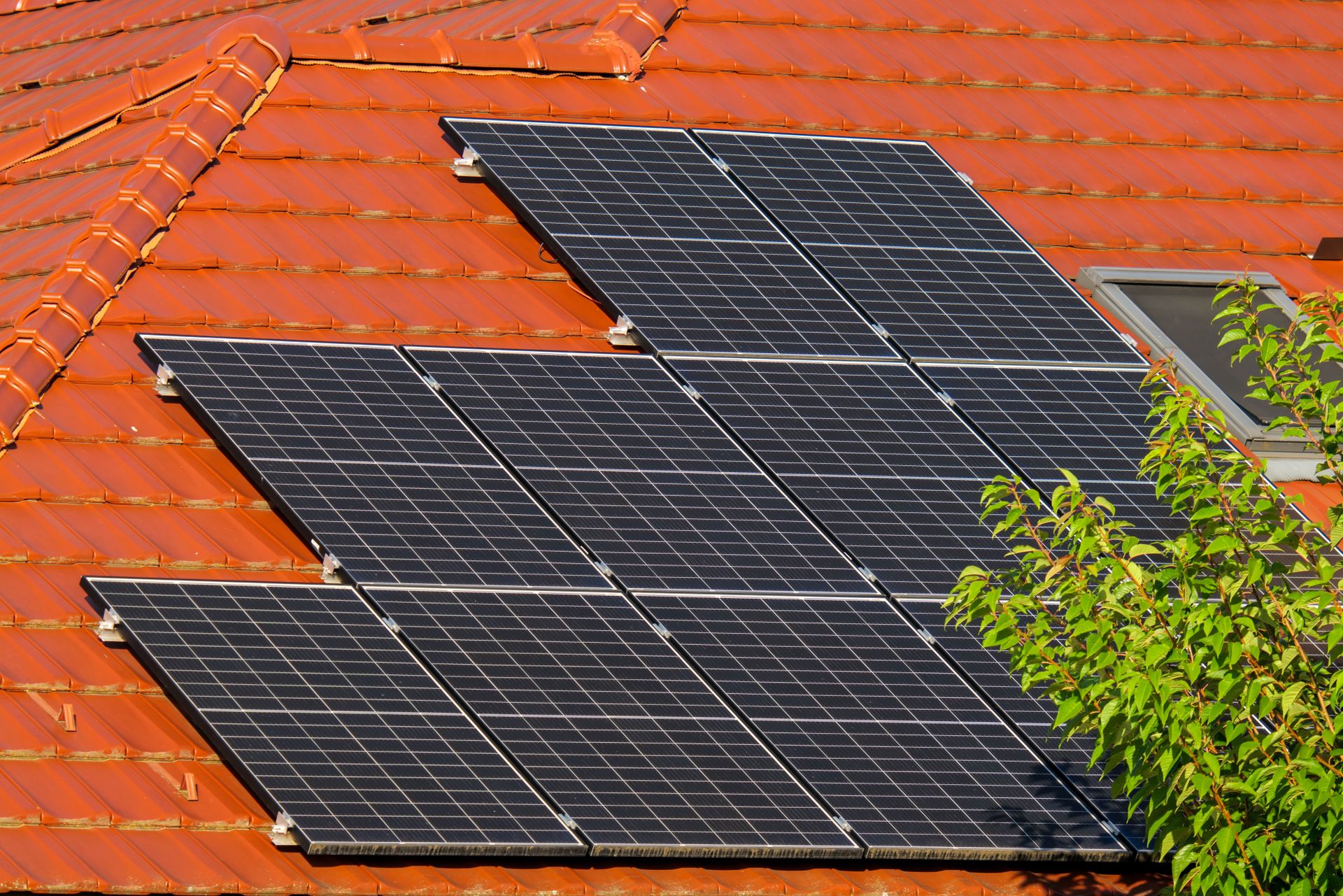
From here, there is already something to optimize: directing the production of solar panels to where it is most useful, starting large consumers when electricity is cheap or free, and noticing when something is running unnecessarily.
Measurement: how much does it cost?
- Electricity consumption measurement on the main meter and on separate circuits — heat pump, air conditioner, boiler, electric car charger are shown separately.
- Reading gas and water consumption where the meter allows it.
- Solar panel production and feed-in in real time, not calculated from the monthly billing.
- Battery storage charge level and direction — is it charging or supplying power to the house?.
Optimization: consumption is adjusted to production
If you have solar panels, the biggest savings come not from production, but from when you use it. The value of your own consumption is much greater than what you get for feeding it in. The system therefore does what no one could do manually: it monitors production and adjusts the large consumers accordingly.
- The boiler heats when the sun is shining, not at night.
- The electric car charges from excess production and stops when it gets wet.
- The start of the washing machine and dishwasher can be shifted to the peak of production.
- The heat pump pre-heats or cools when energy is cheap — the thermal inertia of the house is the storage.
Alert to what is not normal
Measurement has a less visible, but often more useful, benefit: it lets you know when something is wrong. Constant water consumption at night — something is probably dripping. Heat pump consumption has spiked in the same weather — something is wrong. These would go unnoticed for months.
What you should know before you get started
- I need space in the distributor. For circuit-level measurement, measurement modules are placed next to the circuit breakers — this requires free space in the cabinet.
- Not all clocks are legible. Reading your gas and water meter depends on the type; we will check which one you have during the survey.
- Solar inverter type. Most inverters today can be read, but not all of them with the same level of detail.
- Measurement alone does not save money. The first month is data collection; the rules come after, based on real numbers.
What doesn't energy monitoring solve?
It is worth clarifying what it is not for. The measurement itself does not save a single forint — it only shows where the reserve is. It does not fix a poorly insulated house, it does not replace an old boiler, and it does not replace solar panels where there are none.
What it gives: a basis for decision-making. Then, it is no longer decided based on a feeling whether replacing windows or a heat pump is more worthwhile, but on measured data. And it also reveals those little things that no one thinks about — the freezer in the garage, the old circulation pump, the constantly turned on outdoor socket.
How does such a job start?
First, we put measuring modules in the distribution board and connect what can be read — inverter, storage, water meter. Then there are a week or two when nothing happens, just data accumulates. We build the rules around this: when to start the boiler, when to fill the car, when to preheat the heat pump. This order does not work in reverse.
What we work with
- Shelly — three-phase main metering in the distributor (Shelly Pro 3EM) and circuit-level metering on large consumers (Shelly Plus PM, Pro 4PM); the optimization is based on these.
- Bmeters — radio water meters and heat meters, read into the system; gas meters with pulse transmitters, where the type allows.
- Solar inverters and storage (Fronius, Huawei, SolarEdge, SMA and others) — with local Modbus or network reading, bypassing the cloud.
Let's see what you can measure.
Describe whether there are solar panels, a heat pump, or an electric car, and what the distribution board looks like — this shows what can be done without dismantling.
I request a consultation. The other areas