Smart system for apartment buildings
A shared server in the building, a separate smart home and metered consumption for every flat – on a network where nobody can see into their neighbour’s system.
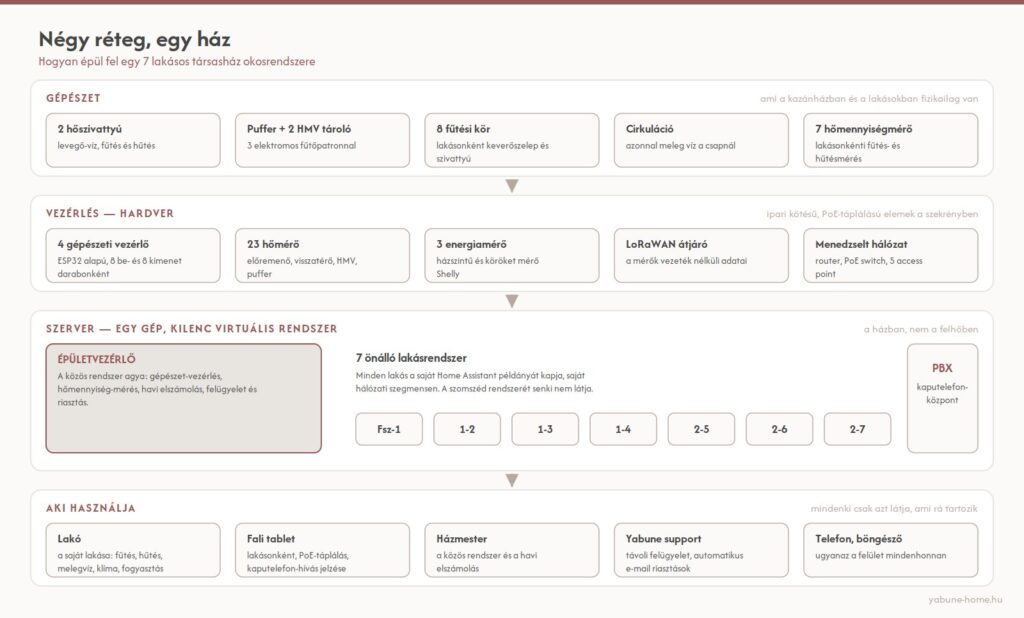
An apartment building isn’t automated like seven family houses side by side. The building services are shared, the bills are individual, and every flat has to work well at the same time. So we design for the whole building: a local server on which every flat gets its own system, and a caretaker interface that shows the building as a whole.
One server in the building, a thin client in every flat
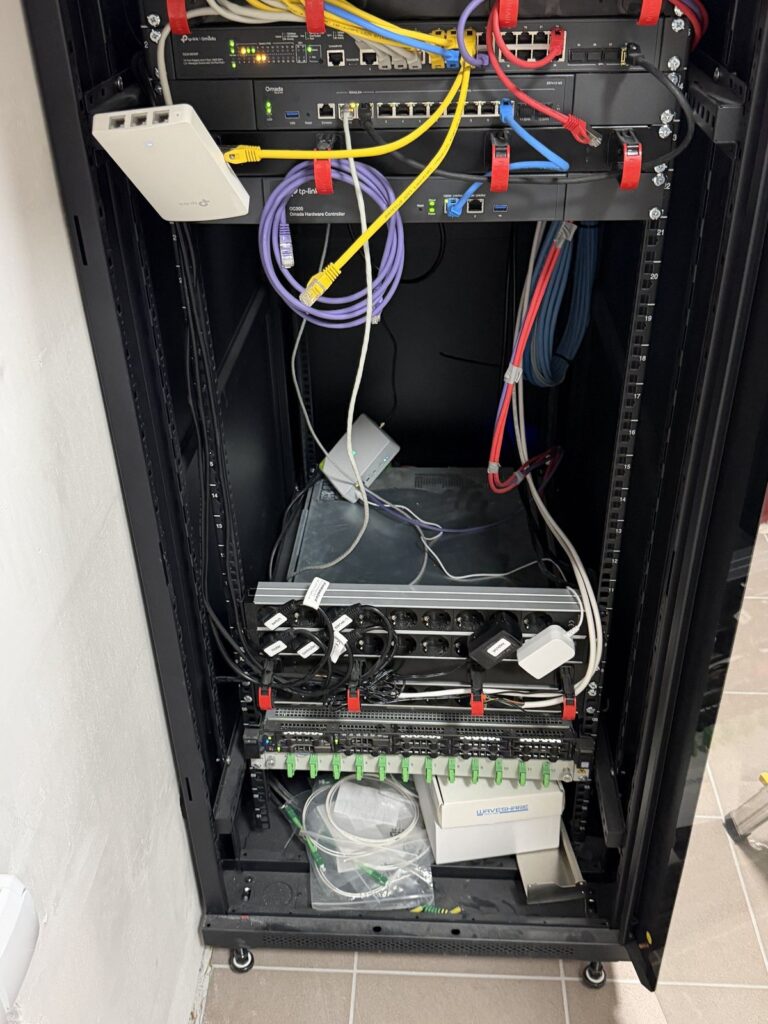
Control runs locally on the building’s own network, so it keeps working during internet outages. Every flat gets a thin client that connects the flat’s devices to the shared server, so there is no need to build and run a separate hub in each flat. On the server (Dell, Proxmox) each flat has its own Home Assistant system, and nobody can see their neighbour’s.
Two interfaces
For residents
Residents reach their interface from a phone, tablet or browser and see only their own flat. They can set heating and cooling, control lighting and shading, and create their own scenarios.
For the caretaker
The caretaker sees the shared building services and the status of every flat on one interface, and is notified if something goes wrong – for example if a device drops out or a flat can’t hold its temperature.
Metering and billing
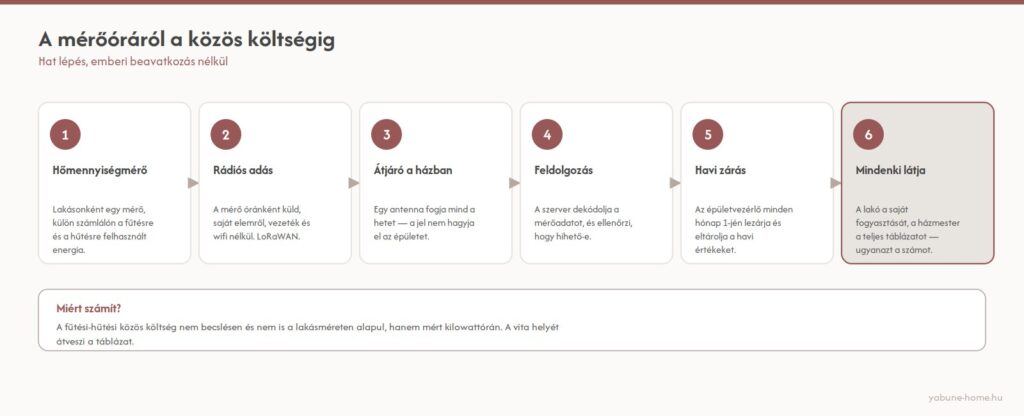
Every flat gets its own heat meter (B METERS HydroCal M4), with separate counters for heating and cooling. The meters run on batteries and send their data over LoRaWAN radio to a gateway inside the building (SenseCAP), from which a ChirpStack server running in the house picks it up; the signal never leaves the house. At the start of each month the system closes the monthly readings: residents see their own consumption, the caretaker sees the full table, and both show the same figures. So the shared heating and cooling costs are based on metered kilowatt-hours, not estimates. It can be retrofitted in existing buildings too; what changes are needed, we decide after a survey.
Low-voltage systems for developers and general contractors
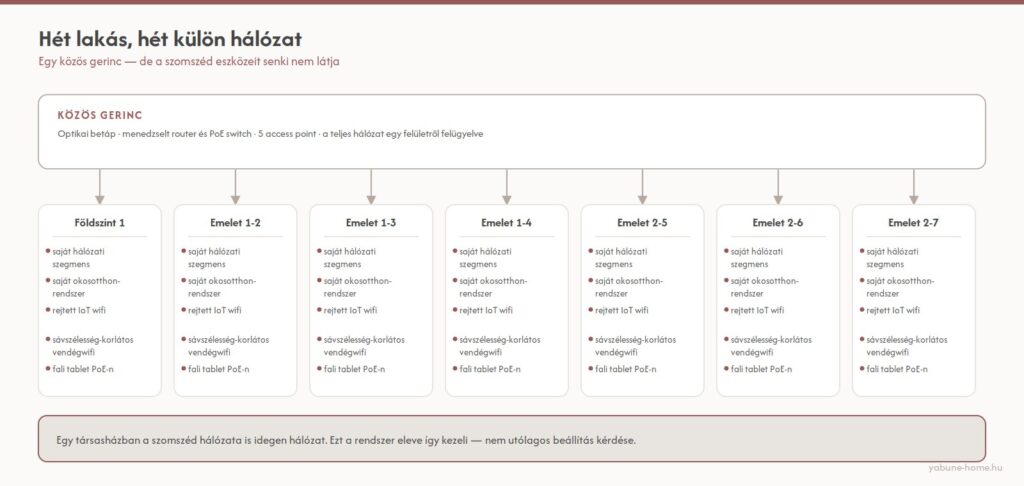
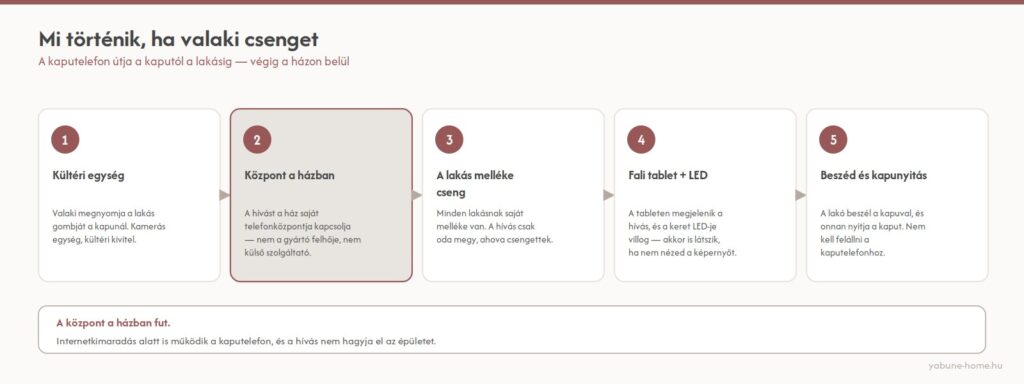
For new apartment buildings we also design and install the complete low-voltage network. The backbone is shared: fibre connection, TP-Link Omada router, PoE switch, hardware controller and access points. Every flat gets its own network segment with its own Wi-Fi and guest network. Calls from the Akuvox intercom are switched by the building’s own Asterisk-based phone exchange, to a separate extension for each flat; we also install access control and community Wi-Fi. At handover the contractor receives an installation document, and the caretaker and residents receive manuals. After handover we also offer maintenance on agreed terms.
Reference: seven flats in Szeged
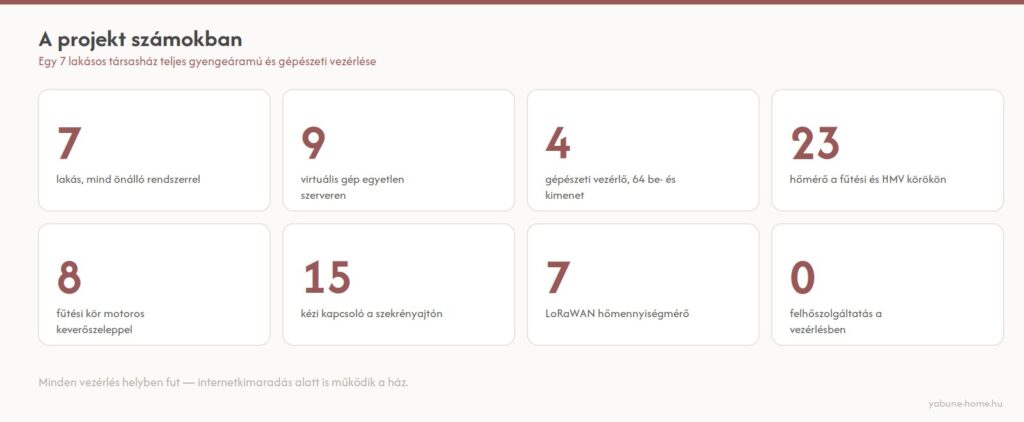
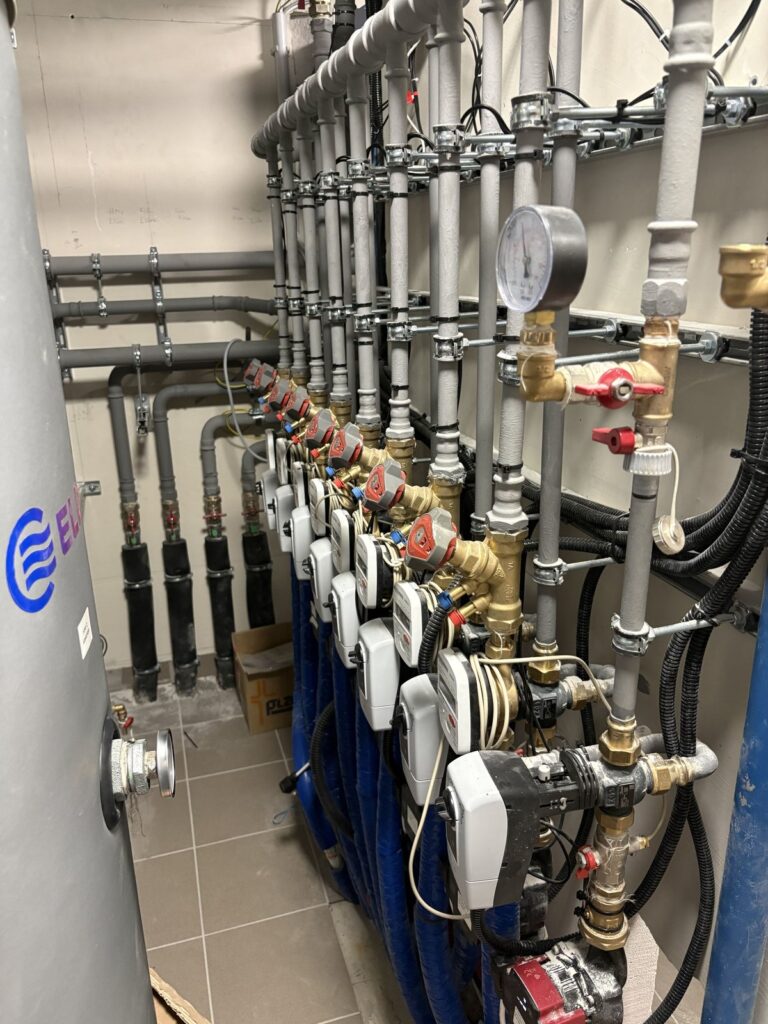
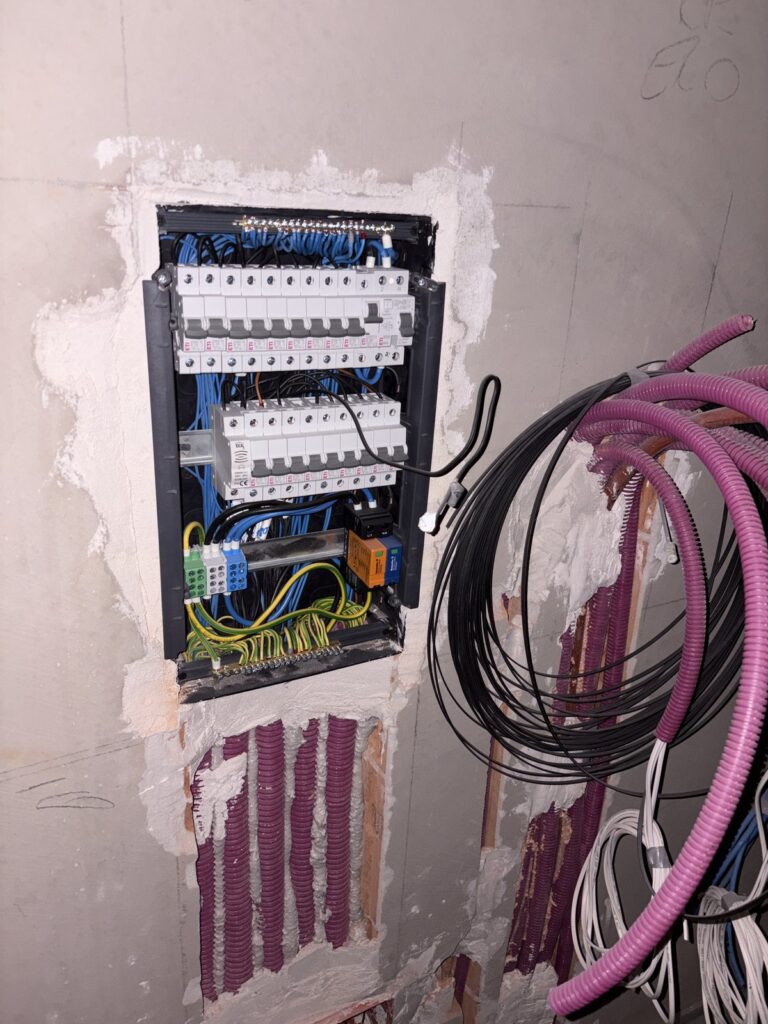
Handed over in summer 2026: seven flats, a shared heat pump plant, underfloor heating controlled flat by flat with mixing valves, per-flat metered consumption, a complete low-voltage network and an intercom. The on-site work took six weeks; most of the programming was done remotely.
What went into the building
How do we start?
For new buildings we sit down with the building services engineer and the electrician at the design stage and agree what we meter, what we control and where the cables go. For existing buildings we start with a survey: we look at what is installed, what the network is like and what the building measures today.
Running a hotel? Our solution tailored to hotels is Yabune Hotel Solution →
Building or renovating an apartment building? Tell us how many flats there are and what you’d like to meter or control.