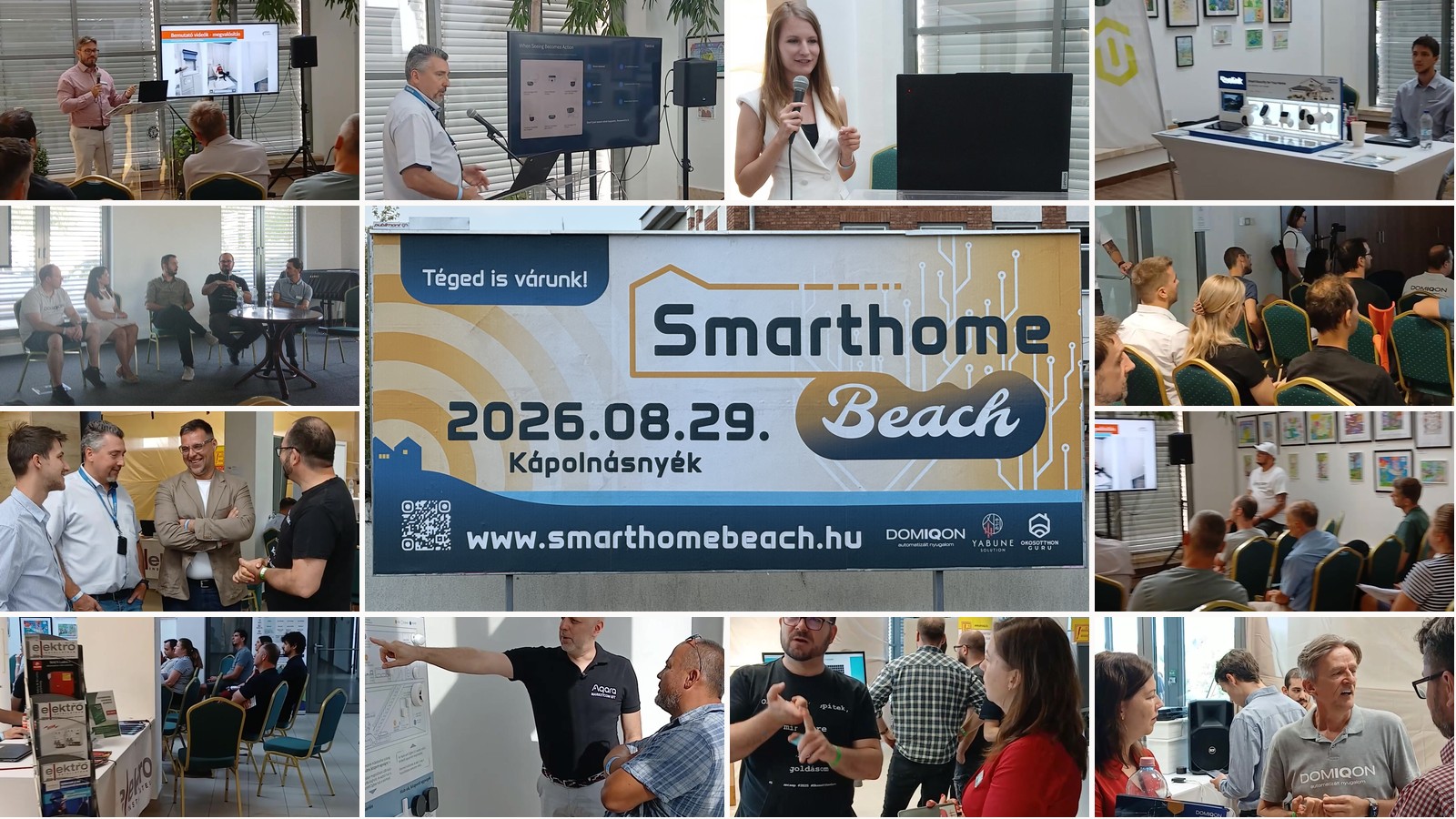

On August 29, 2026, we organized the second time in Kápolnásnyék, at the Halász Gedeon Event Center. Smarthome BeachThe event was organized by Yabune Solution together with the Smartopert and DOMIQON teams, and this year it differed from last year in two ways: the main language was changed from English to Hungarian It was, and in addition to professionals, we also expected those who were attending a smart home event for the first time in their lives.
Serving both audiences at the same time is not easy. An installer, a mechanic or an interior designer is not as busy as someone who is currently building and just wants to know what to look for. That's why the day on two parallel program branches ran – with the same topics, at two different depths.
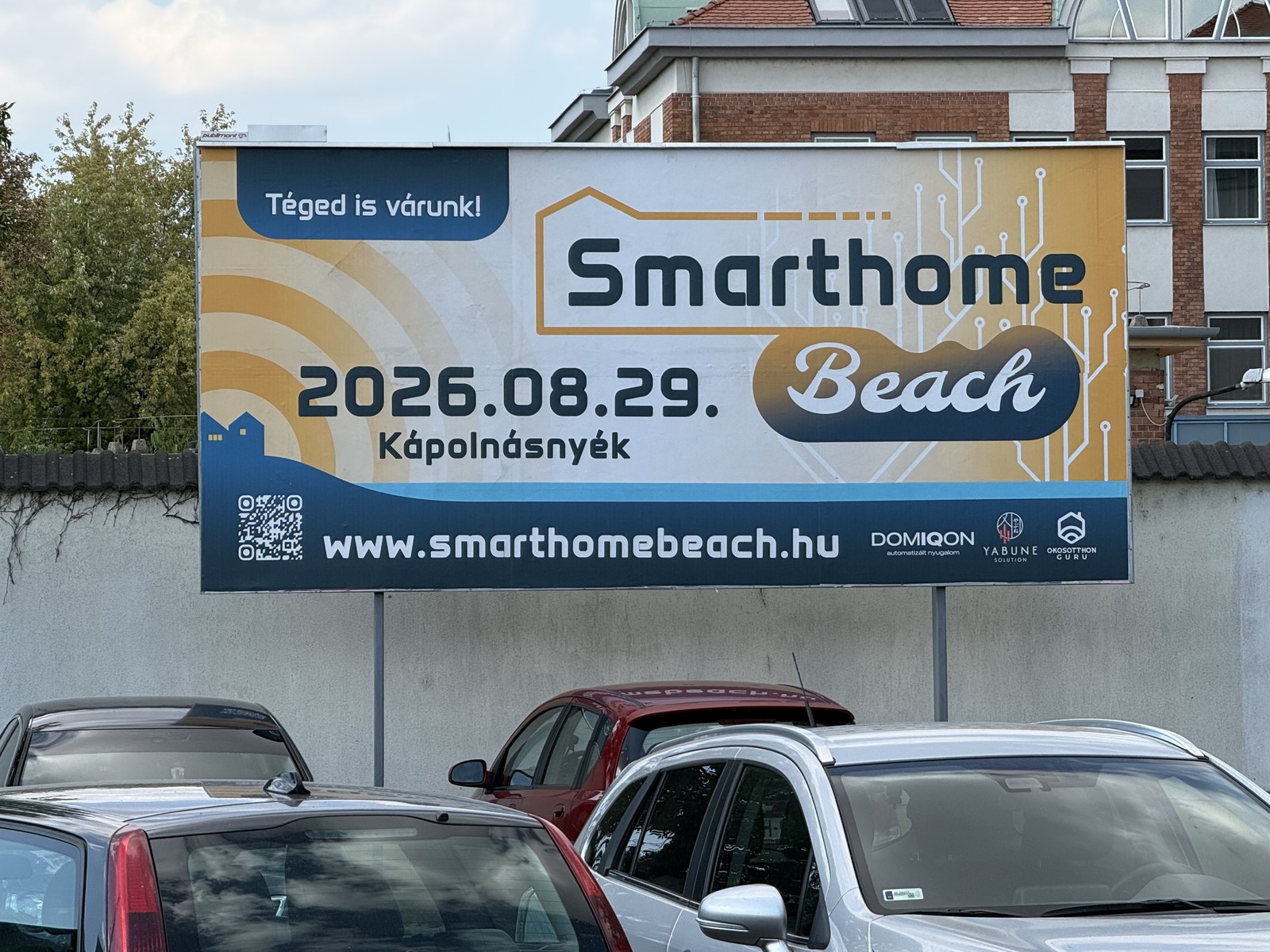
The location: Kápolnásnyék, next to Lake Velencei
The „Beach” in the name is no coincidence: the event took place in the vicinity of Lake Velence, in the Halász Gedeon Event Center in Kápolnásnyék – next to the M7 highway, and a short drive from Budapest and Székesfehérvár. For a Saturday at the end of August, we wanted a conference room that was not in the city center: the professional day here is more relaxed, the conversations are longer.
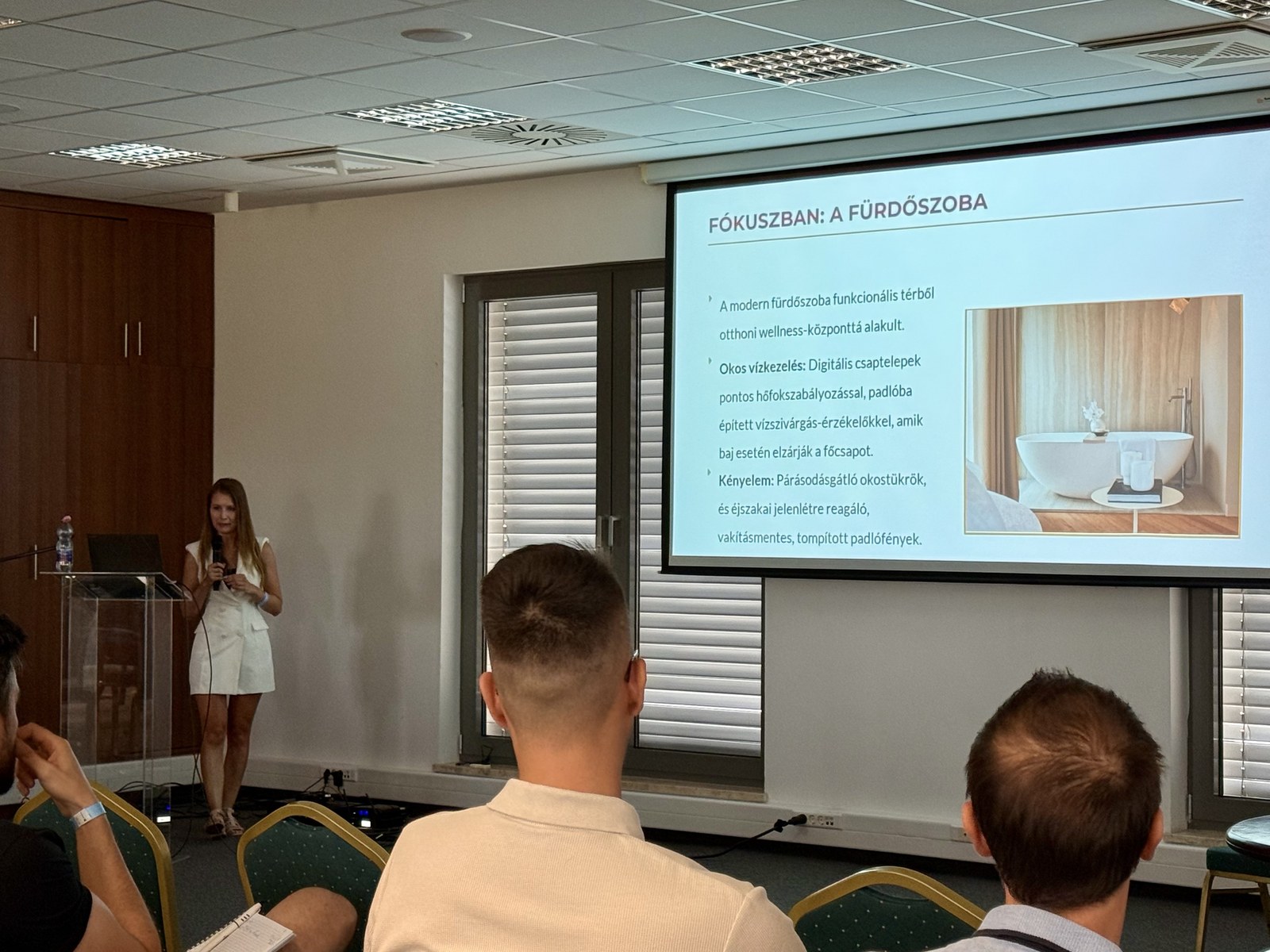
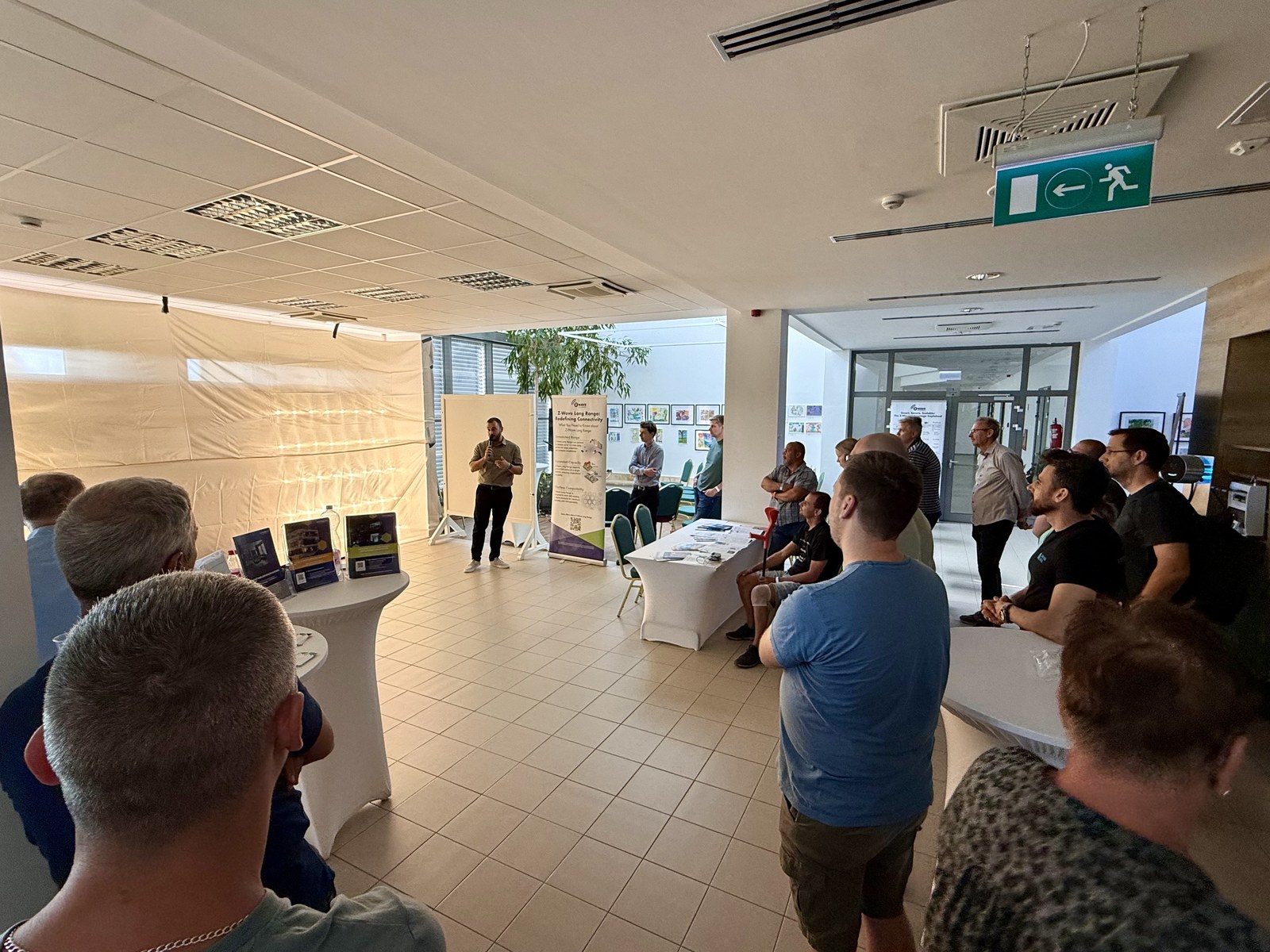
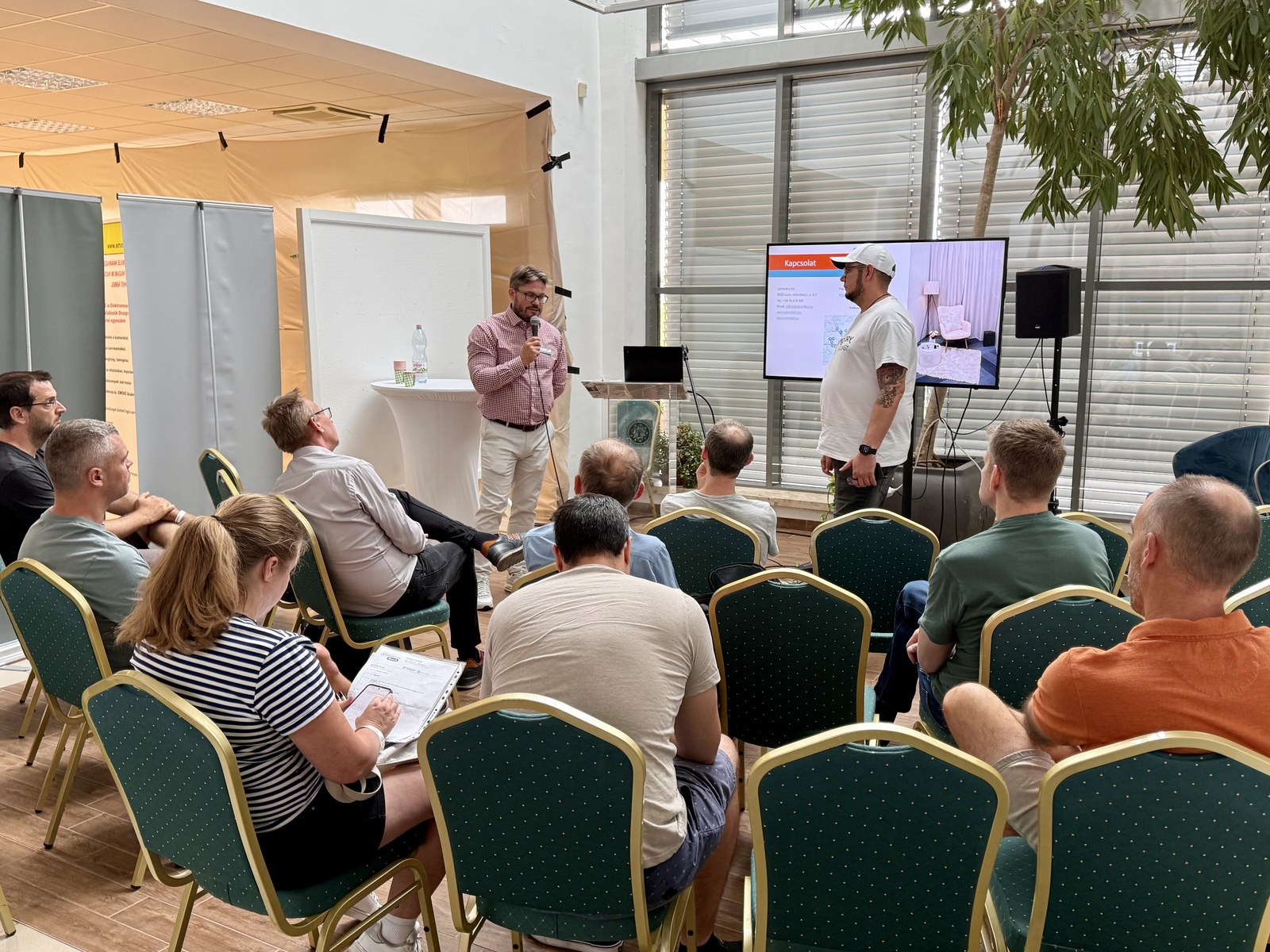
The two programs were actually determined by the building's capabilities. The large, enclosed hall, equipped with a projector and sound system, housed the Deep Dive, where no one walks through the background during a 40-minute performance. The glass-walled, naturally lit lobby – with indoor trees and pictures on the walls – is the Beach stage and hosted the exhibitors: the goal here was to have the performance, the stand and the coffee in one space.
The technology was installed by the Yabune team the day before the event and operated until the end of the day; the sound system was provided by the house. The house team was a partner throughout – even during the late-night packing. A day like this is decided behind the scenes: if the venue is working, the audience only sees the program.
Two programs, two audiences
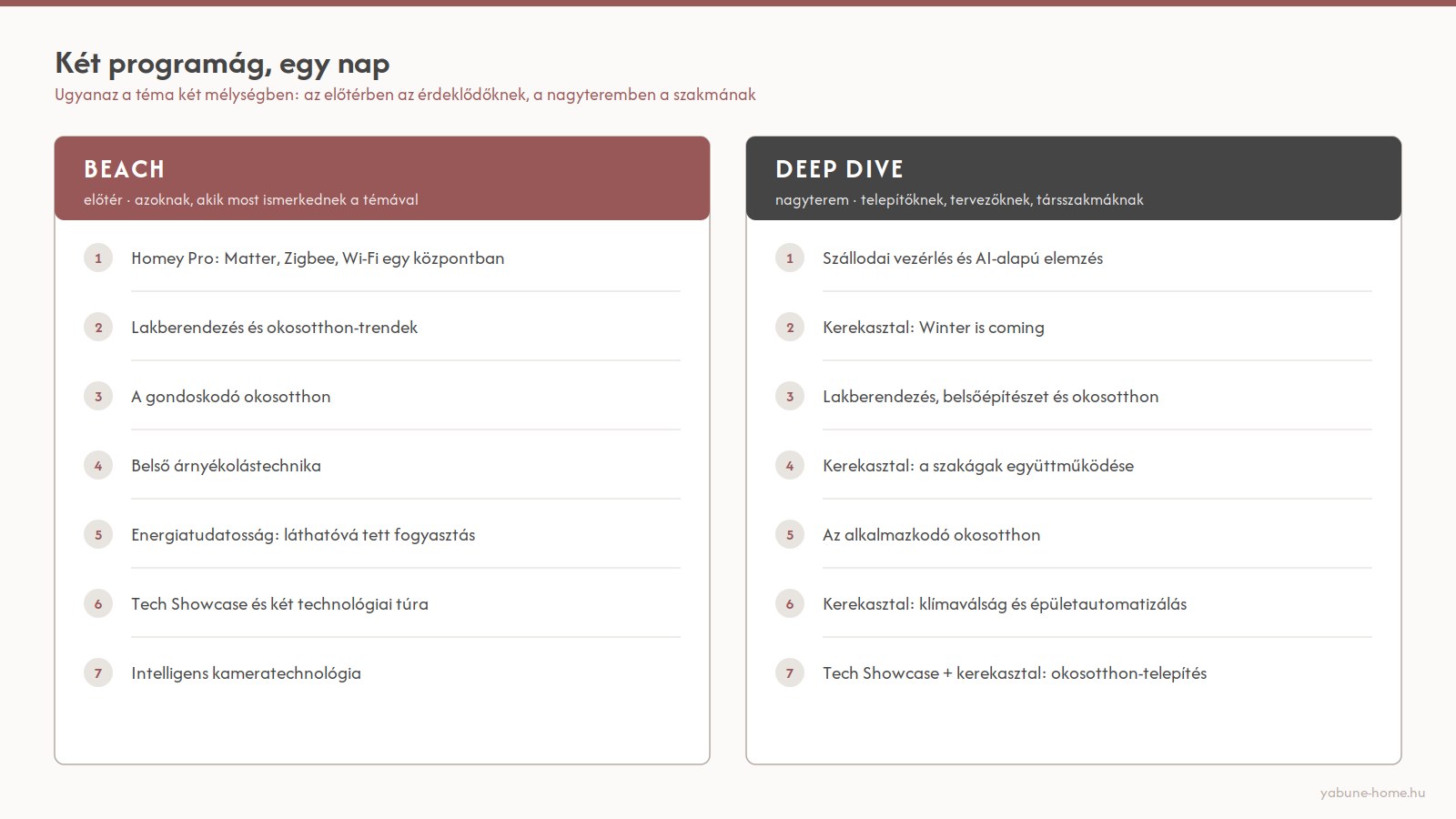
The one running in the foreground Beach The program was aimed at those who are just getting to know the topic: smart home centers, interior design trends, the caring smart home, interior shading technology, energy awareness and camera technology – in half-hour, easy-to-understand blocks, in the middle of the exhibition space. The event, which took place in the main hall, Deep Dive designed for the profession: longer lectures and four round tables on how electricians, mechanics, interior designers and systems integrators work together.
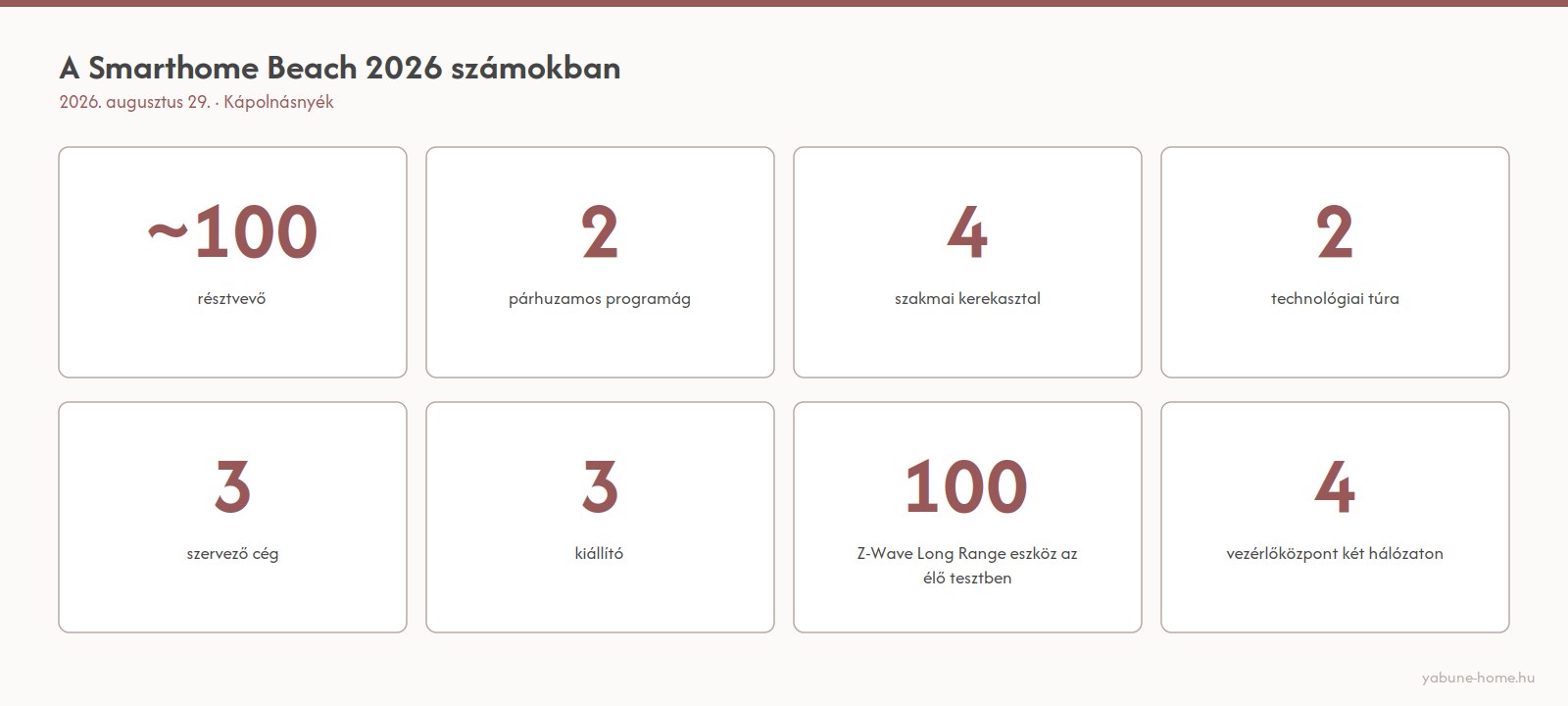
The event in numbers
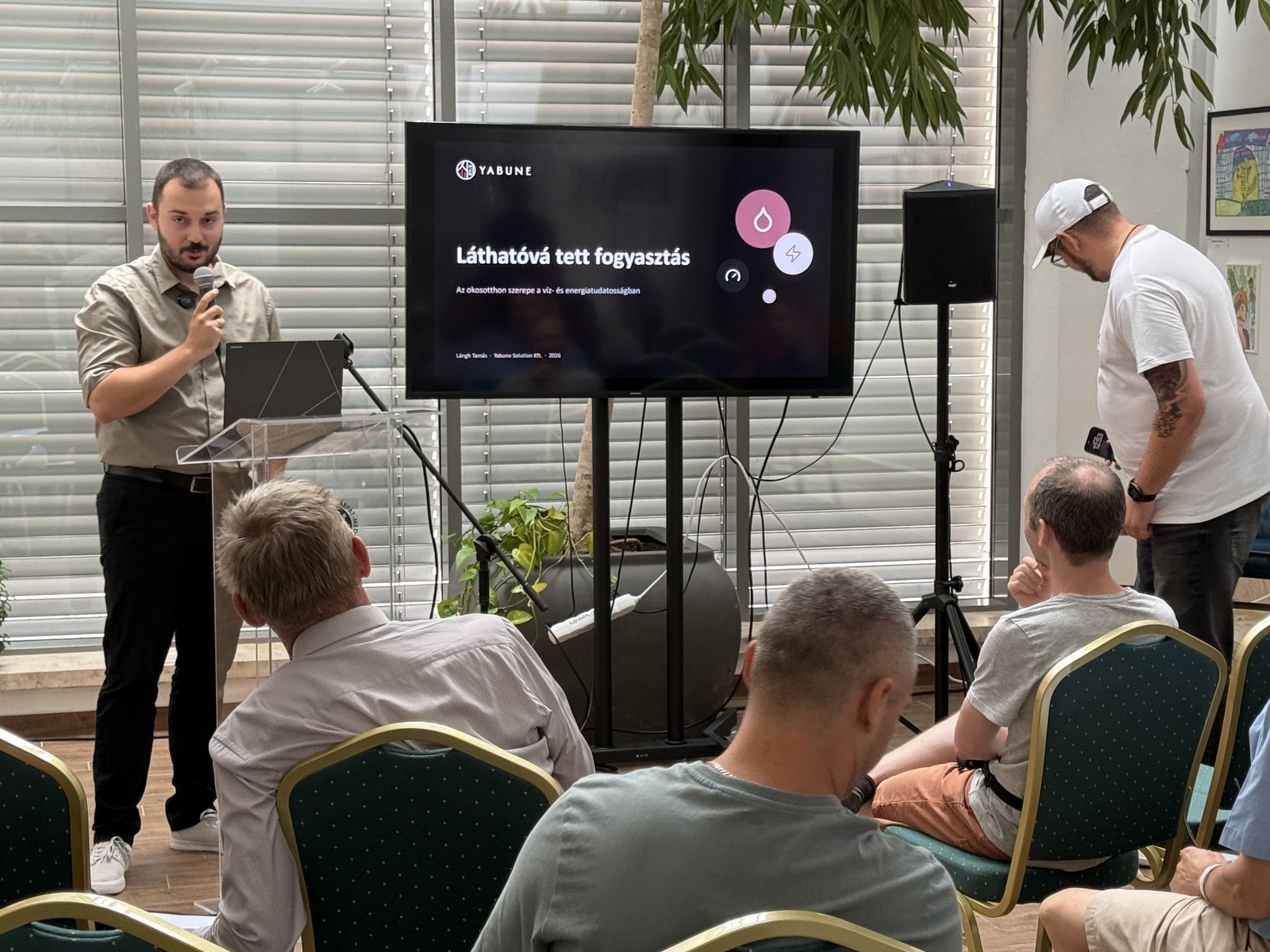
Consumption made visible – what we brought to the Beach stage
Tamás Lángh from Yabune spoke about the role of smart homes in water and energy awareness in the Beach program. Awareness is not hindered by a lack of intention, but by not receiving feedback. We typically get a lump sum report on consumption once a year. The smart home turns this around: consumption becomes a time series, and it is visible where it is generated.
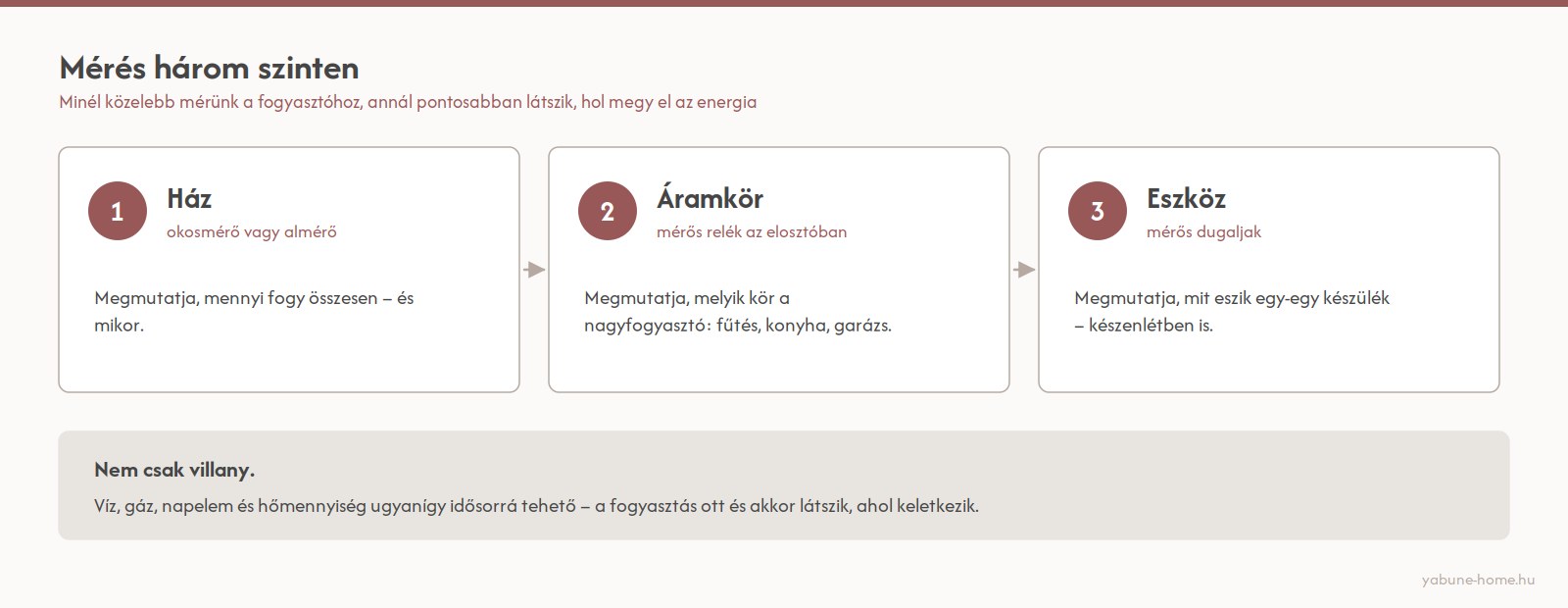
Measurement can be done at three levels, and for us this is not extra, but part of the standard setup:
The first example is 7-apartment apartment building in Szeged There, awareness begins with billing: a battery-powered, LoRaWAN radio heat meter measures heating and cooling in each apartment, the system closes the month automatically, and the resident sees his or her own kWh on his or her wall tablet. Three silent automations work alongside it: if the solar panel at least 4 kW for ten minutes If there is a surplus, the heating cartridge directs it to the hot water tank; the flow temperature is set to the lowest safe value, monitoring the dew point; and the hot water circulation is scheduled and operates at the push of a button, not day and night.
The structure also serves this purpose: each apartment has its own Home Assistant, on its own network segment – the resident only sees their own. The shared mechanical engineering is managed by a separate building controller: two heat pumps, buffer, hot water tanks, measurement and billing. The apartment signals demand upwards, the building returns data downwards. Anyone who sees their own number heats differently.
We do two things with water: we measure it and we prevent damage. With a pulse water meter, water consumption becomes a time series, so the basic dripping at night is immediately visible. And the combination of a water sensor and a motorized main shut-off valve is the fastest payback element in a house.
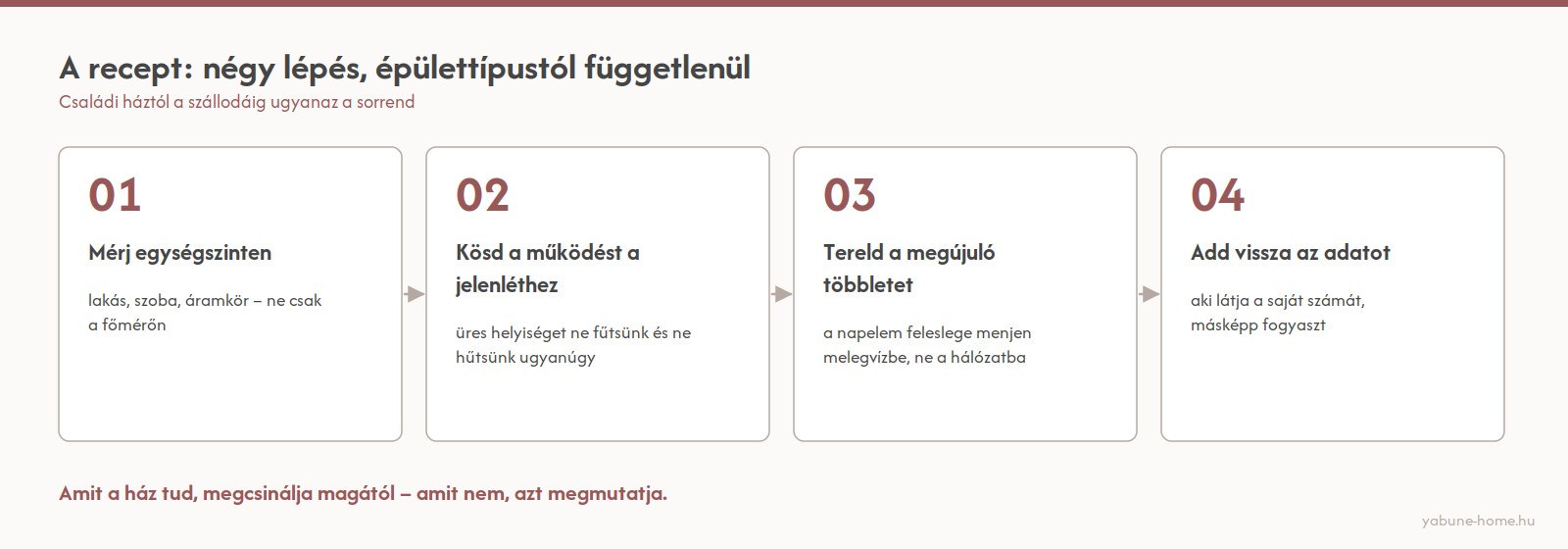
The recipe is independent of the building type:
Smart hotel, from room to AI – Deep Dive opening
The day started in the main hall with a presentation of a working hotel system: 3,500 devices deployed, 150,000 managed entities, with a radio repeater per room, without breaking down walls. The key concept is software-defined room: the hardware is vendor-independent and only provides capabilities, but the operation of the room is described by code, which is version-managed, tested on one room, and then expanded to hundreds. There is no need to get out of the way for a new feature: just release the new software version.
A room typically has a fan coil or radiator thermostat, towel dryer control, lighting circuits with a main switch, metered sockets, door and window detection, card holder presence and room-level energy metering. The difficulty is not in the normal operation, but in everything that deviates from it: different equipment from hotel to hotel, correct status even after a power outage and manual adjustment, replacing manufacturer deficiencies with software – and that 3500 devices cannot be monitored manually. Device failure is visible within minutes, automatic recovery is run for known error patterns, and a fault ticket and alarm are created for the rest. For example, rapid power-downs are counted separately: this is the first sign that the device is failing.
The second half of the presentation was about what half a year of measurement data says when analyzed with AI tools. In the house under study 254 rooms for 185 nights data was available, exclusively from the control system's own measurements, without hotel booking software.
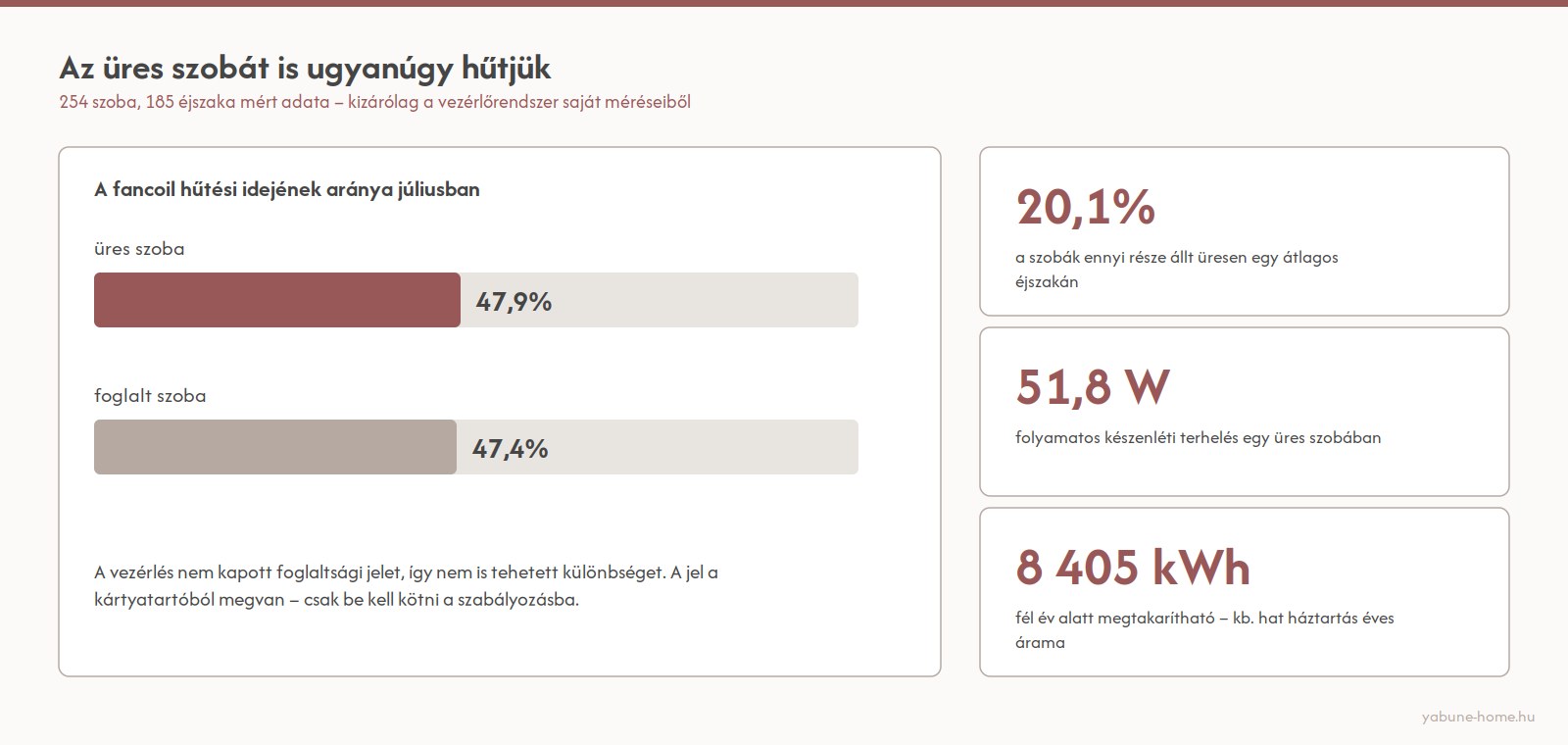
The most important thing we found: in July, the fan coil of the empty room is the time 47,9%in the refrigerator, the occupied 47,4%in. The system did not make a difference because it did not receive an occupancy signal – even though it did from the card holder. If the cooling is tied to occupancy and the reservation leaves connected wings empty, in half a year 8405 kWh, roughly the annual electricity of six households. The 8405 kWh is a lower estimate: it does not include pumps, air handlers, and pipe losses.
We have previously written separately about hotel energy analysis: How to save money and analyze a hotel's energy consumption?
The total number never says anything. The fault is always shown by the one room that is different from the others.
Four round tables: the disciplines at one table
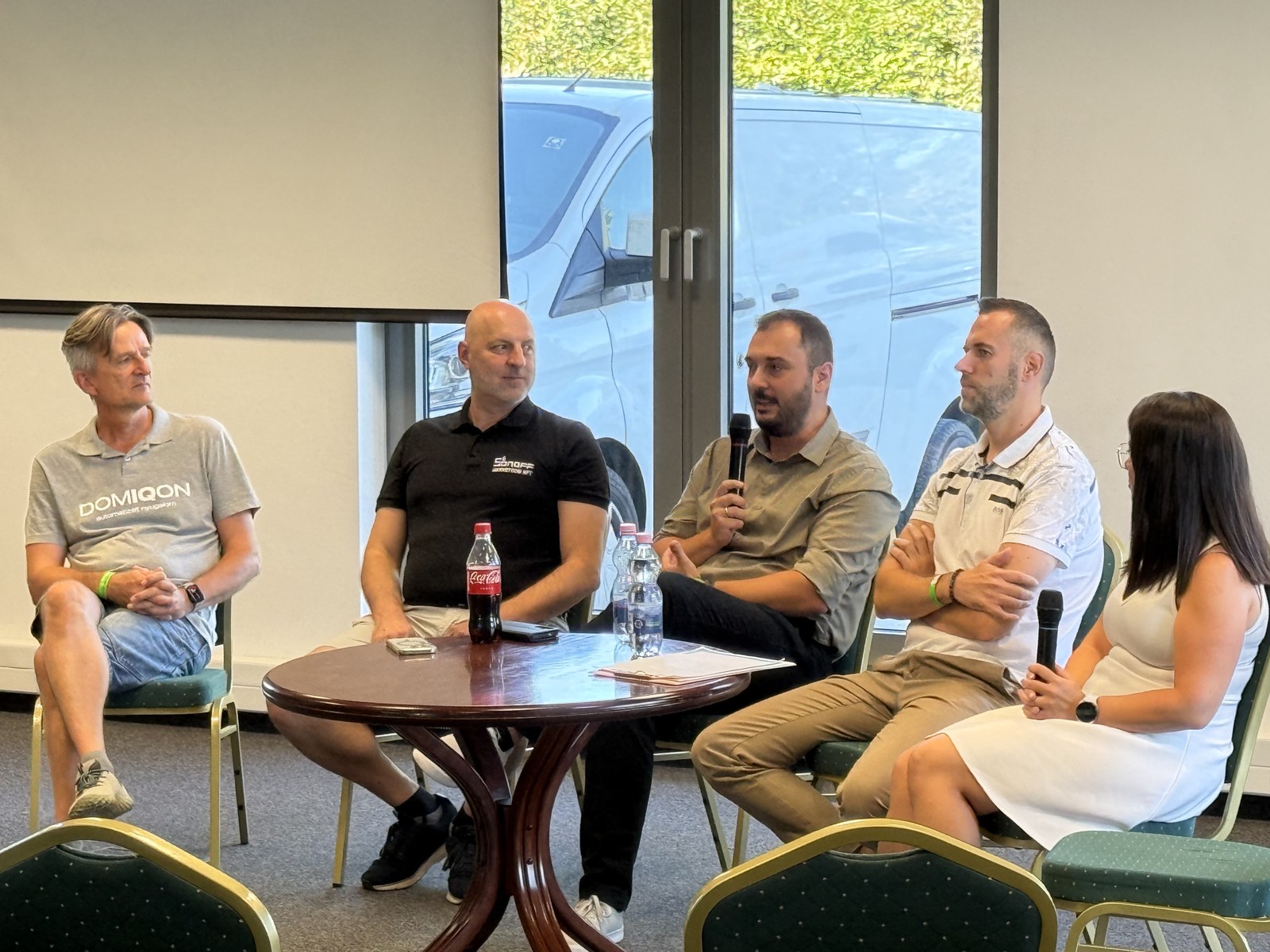
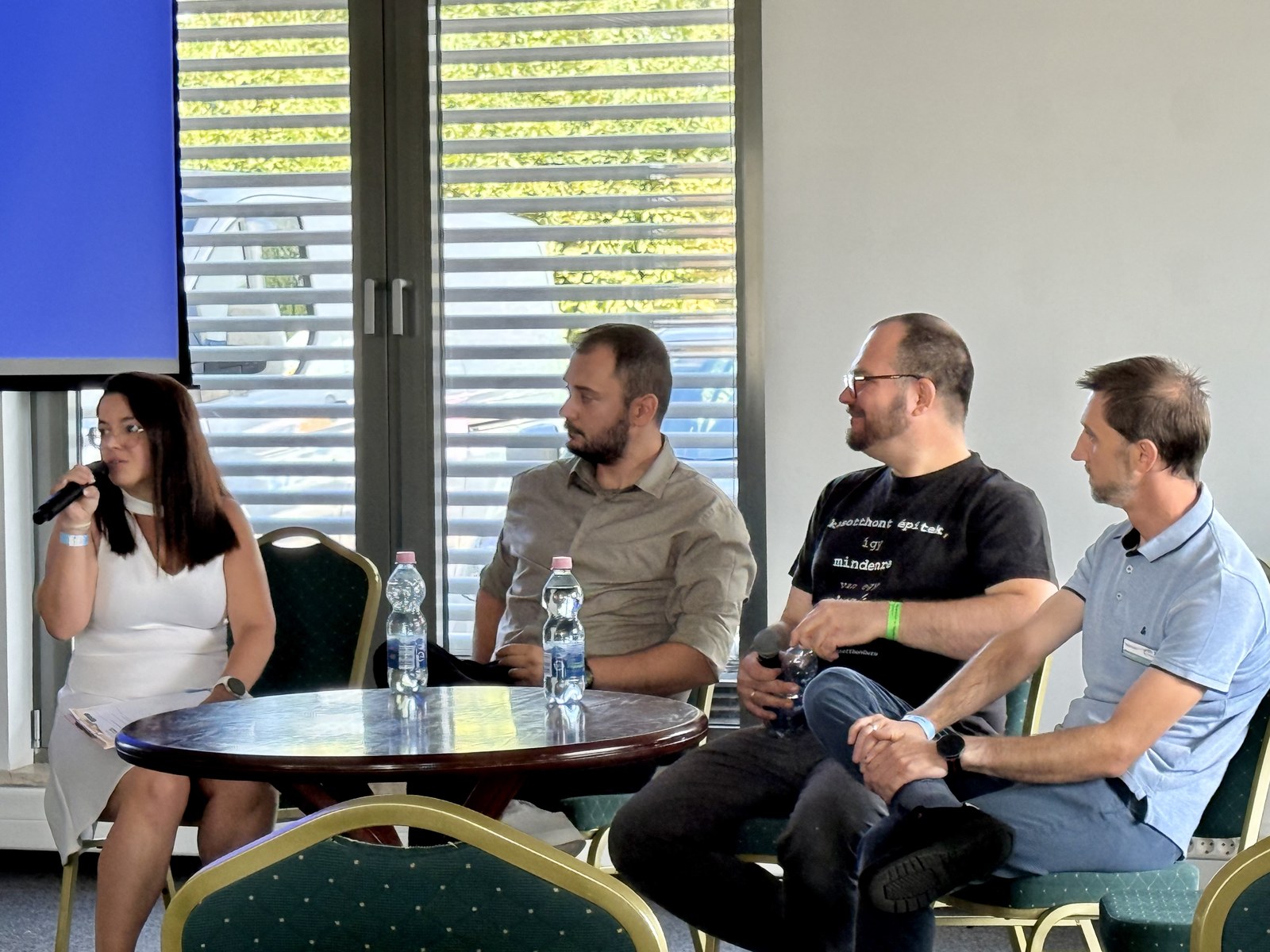
There were four discussions at Deep Dive: on preparing for the heating season („Winter is coming”), on cooperation between disciplines, on the relationship between the climate crisis and building automation, and finally on smart home installation itself. Yabune sat at the table in three – alongside colleagues from a mechanical engineering expert, a distributor, a shading technology manufacturer, and a system integrator.
Tech Showcase: 100 Z-Wave devices under live load
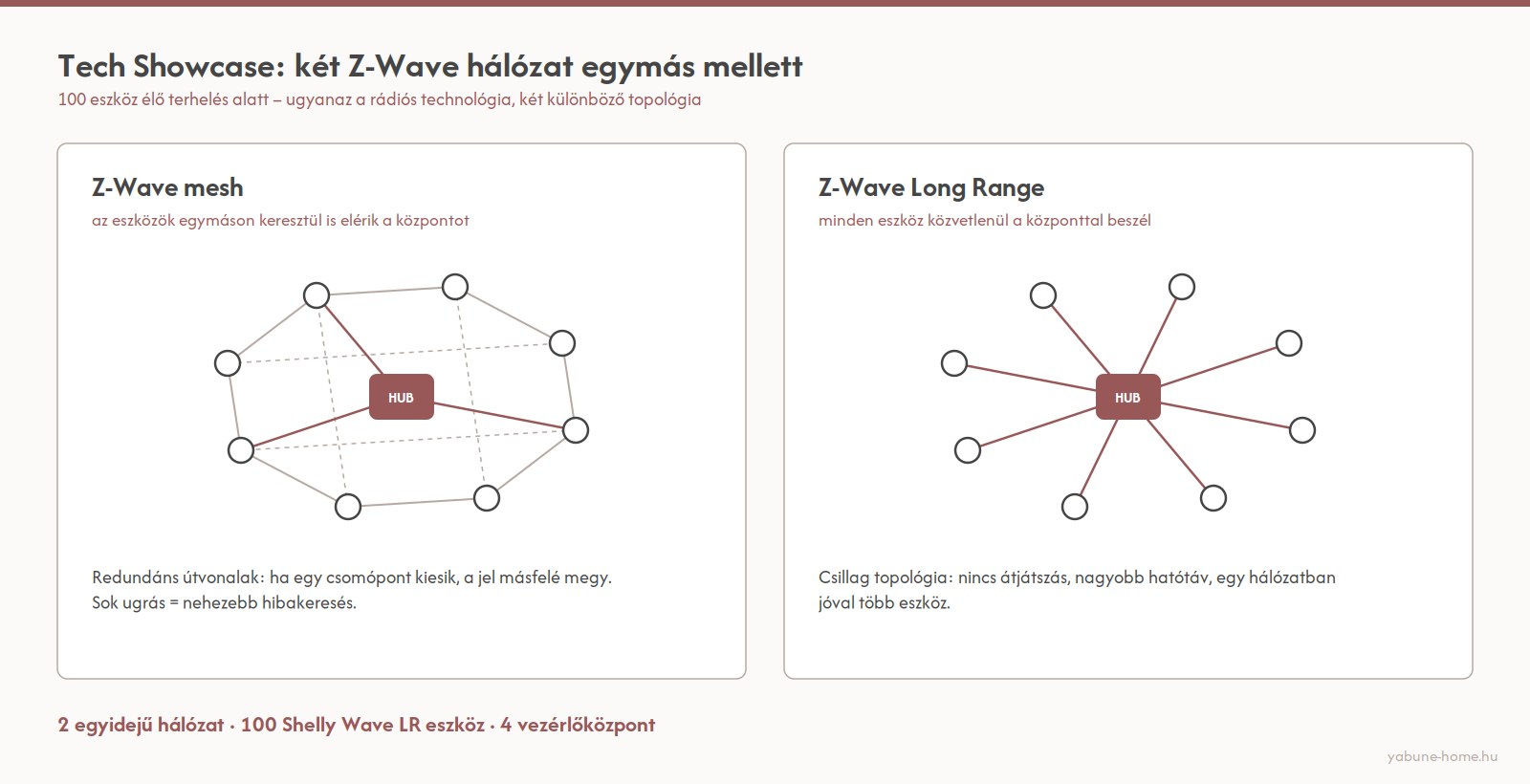
The professional highlight of the day was the Tech Showcase: two simultaneous Z-Wave networks, 100 Shelly Wave LR devices and four control centers. We wanted to show what wireless technology is capable of in real-world situations, in a crowded event radio environment. One network operated as a traditional mesh network with redundant paths; the other as a Z-Wave Long Range, where all devices talk directly to the hub.
About the structure and measurement results in a separate technical post we report.
The exhibition space
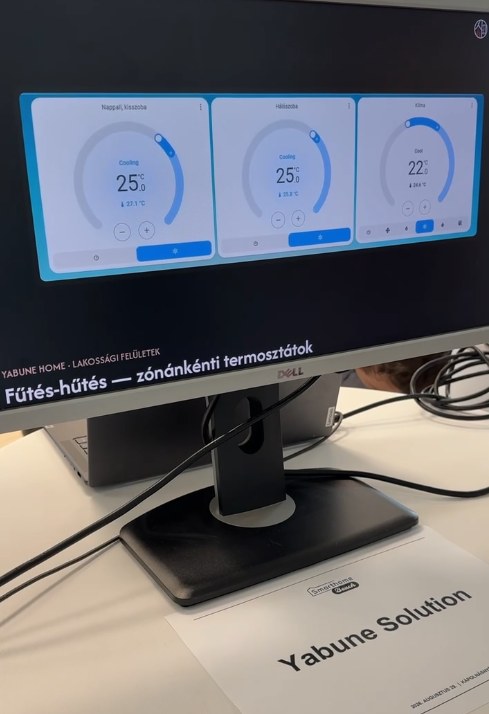
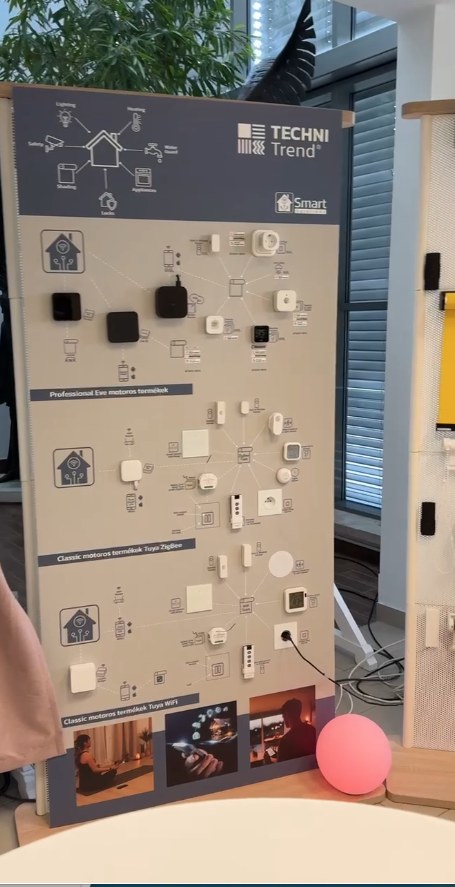
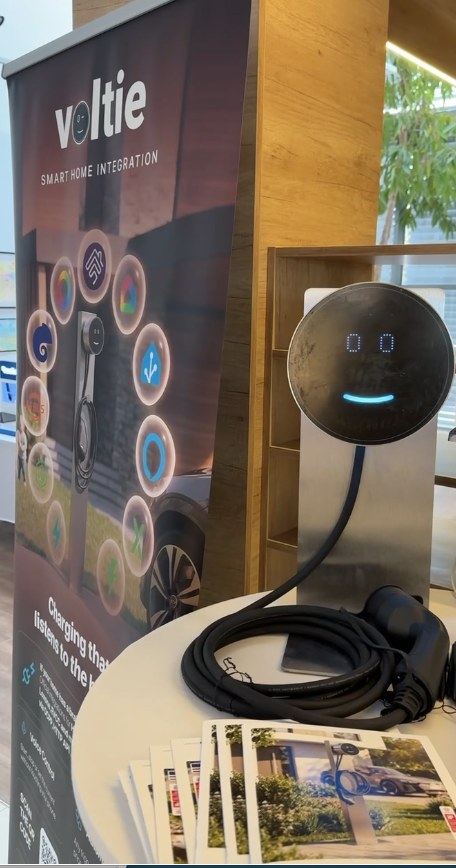
In the lobby, the Synthetics shading solutions, the Cellect Hungary cameras and smart home devices, MarketCom and presented the Shelly, Sonoff and Aqara devices it sells. At the Yabune booth, our residential and hotel user interfaces were running live.
The exhibition space was located in the lobby, around the Beach stage: anyone who had heard about the motorized blinds or the smart light switch in a presentation could also take them in their hands a few steps away. The two guided technology tours served the same purpose – after the presentation, you could ask questions where the device worked.
It was also mentioned on TV.
In connection with the event, we also talked about how to build a smart home on Fehérvár Television's program "Public Space".
Who did we do it with?
Smarthome Beach is a joint effort of three companies: Yabune Solution (software development, Home Assistant, system integration), the Smartopert (automation, process development, knowledge sharing) and the DOMINIC (manufacturer-independent design and construction). Our professional partner is Electrical installer trade journal and the EMOSZ The full list of the program and speakers is available at smarthomebeach.hu available on the page.
Thank you to the speakers, the exhibitors, the venue team - and everyone who dedicated a Saturday in August to this.
If you want to see the consumption in your own building
At Yabune, we design, build and operate smart home and building control systems – from single-family homes to condominiums and hotels. If you are building, renovating, or would like to finally see the consumption of an existing building as data, find us: we'll see what's worth measuring and what the house can do on its own.