

What Do We Do?
Yabune branches
We believe that data is only valuable when it leads to decisions. That technology is good when it works unnoticed in the background. A properly implemented system is not an expense, but a long-term investment that pays off during use. It serves a better future.

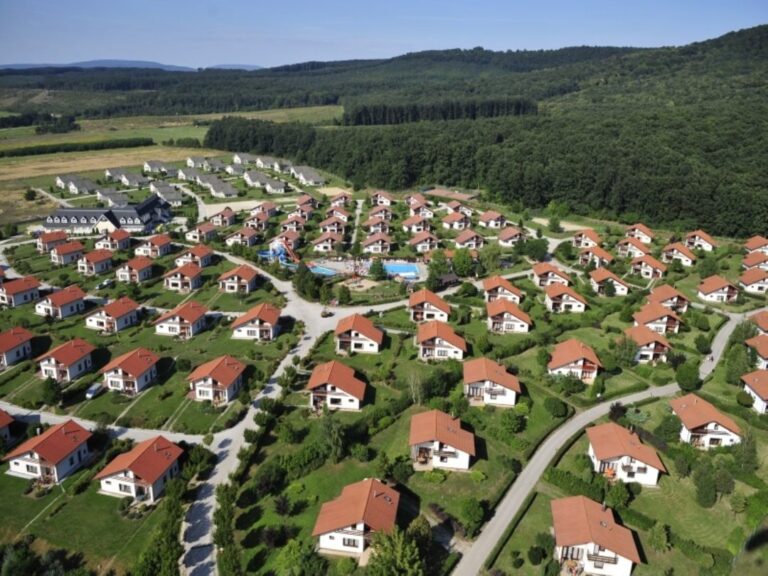
Smart solutions for residential properties. From planning to project management to the firstflick of the lightswitch.

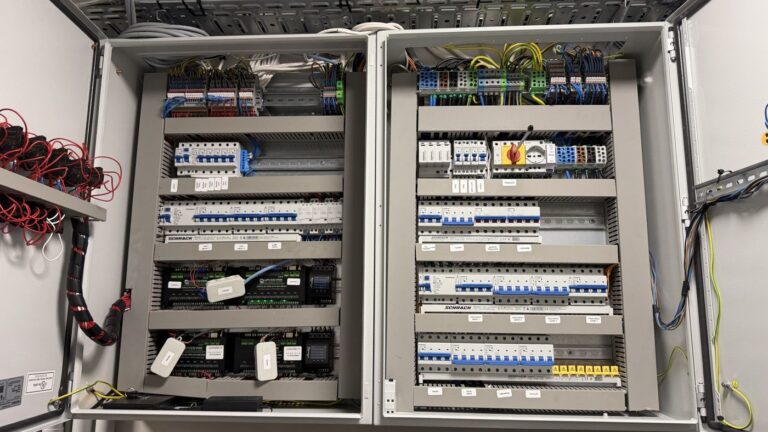
Reliable control solutions for industrial facilities, optimizing efficiency and safety.

Comprehensive hotel industry expertise that facilitates the digital transformation of hotels, from improving the guest experience to increasing operational efficiency.
Our team consists of experienced electricians, network specialists, engineers and software developers, all of whom are well-versed in hardware integration, cloud computing and user-friendly dashboards. Each system is tailored to the needs of the specific building and customer.
Why people love our system?
Safe Remote Access Through VPN
You can control and monitor your home remotely, either from your mobile phone or any other smart device with an internet connection. For complete security, we build a high-availability virtual private network (VPN) between your home and the Yabune Home servers.
You don't have to worry even in case of internet outage: your smart home system will still be functional. Yabune Home operates on a local network and it does not depend on the internet service provider.
Custom Plugins, Proprietary Software
We create custom plug-ins and develop our own software that is not included in the Home Assistant standard system. For example, the integration of the Computherm E series wi-fi thermostat, but you can even get instant information about the winning numbers of the five-figure lottery - unfortunately only after the draw for now.
The modules we develop are also open source to ensure that Home Assistant remains the most dynamically developing home automation project.
Careful Selection, Tested Components
Home Assistant supports thousands of different products of 1500 brands. This is both impressive and, on the other hand, confusing, as there are very large differences in quality between the integration of individual brands. Yabune Home carefully selects the best for you. Your smart home system will only contain stable and well-functioning components.
Smart Home Supervision, Customer Service
We constantly monitor that your smart home system is healthy and working properly. If necessary, we will repair it before you even notice any disruption. Our team also provides you with Hungarian and English customer support. We provide guaranteed support within 72 hours: we will start investigating the possible error.
Regular Backups and Recovery
After installing the Yabune Home system, we will continue to support you because it's important to us that you get a premium experience. We take care of regular backups and, if necessary, data recovery.
Remote Updates
We constantly watch the latest Home Assistant innovations and make them available to you. To ensure high quality, we only use thoroughly tested and integrated functions. We pay special attention to the security of your data and keep your smart home up to date with the latest security updates.
Knowledge Center
Smarthome Sapiens and our videos
Beszélgetések arról, mi működik egy okosotthonban és mi nem. A legfrissebb adások – a többi, meg a vendégszerepléseink és a cikkeink, a Tudásközpontban.


Those who trust us
Partners











Our suppliers
The logos include both customers and suppliers. A significant portion of the tools and knowledge come from these three.
-
Quantrax Ltd. — COMPUTHERM
COMPUTHERM is a manufacturer of thermostats. Their Wi-Fi and wired thermostats are the dominant players in the Hungarian market; we connect them to Yabune systems with our own developed integration.
-
MarketCom Ltd.
We are the official Hungarian distributor of Shelly and Sonoff, and the exclusive European distributor of SmartWise. A significant portion of the devices used in our systems come from here.
-
Smartopert Ltd. — Smart Home Guru
Smart Home Knowledge Base and Certified Partner Network. We are regularly featured on Smart Home Guru shows — you can watch the shows in the Knowledge Center.
FAQ
Frequently asked questions
Answers to your questions
What makes a smarthome?
In most cases, we encounter homes and properties that can simply be controlled remotely. Digitalized light switches, or perhaps mechanical systems, each with a virtual button. While these are good foundations for a properly automated property with added convenience features, Yabune aims to go significantly further than that.
The most important feature of the systems we install is that they are able to operate independently of devices and brands. We do not need to commit to a manufacturer's equipment, we are free to use the best devices from different manufacturers. The data of all relays, sensors, valves and switches is collected in a processing center.
The cooling and heating system is working properly, the Wi-Fi doesn't drop, there are no more wasteful lights left on or lawns watered before it rains. They respond to the user without the need for an app or a tablet mounted on the wall, hiding complexity and maximizing comfort.
How can I save money by making my home smarter?
The biggest savings from smart home technology come in heating and lighting: a smart thermostat or radiator valves can reduce your heating bill by 15–30%, and automatic lighting control eliminates unnecessary consumption. Where you fall in this range depends on the condition of the building, the heating system, and your habits — which is why it's worth measuring first, then intervening.
It is also worth monitoring standby consumption with smart plugs, which is surprisingly high in many households.
Monitoring consumption can bring significant savings in itself, as we can reduce what we measure. With smart meters, you can see in real time which devices are using the most electricity and easily filter out hidden standby consumers.
In the case of gas, telemetry from smart thermostats and radiator valves provides the most information — you can see when and how much you heated, and adjust your habits accordingly.
Water meters, leak detectors and smart irrigation systems can save a lot of money. Even an unnoticed, slowly dripping tap or toilet tank can mean hundreds, even thousands of litres of water per month.
Why is consulting an expert useful?
When building a new house or renovating an existing one, it is definitely recommended to plan ahead. For example, even though the garage door will not be smart in the near future, it is still worth taking the time to run the 230 V and an additional 6-core wire underground in a conduit. We draw attention to countless such small but critical points during our consultations.
So don't be afraid to seek advice from a smart home expert, even if you want to do the work yourself — the experience of professionals can save you many hours of wasted time during an already stressful construction or renovation project.
Always assess exactly what your goal is and think ahead as much as possible. This is especially critical when it comes to wiring and designing the electrical network: no one wants to have to dig and rewire a nicely finished and furnished house later just because the circuit or neutral was not connected in the right place.
You can find what is worth building by area: Smart home technical preparation.
Wired or wireless solution is the best for me?
It depends on several things, and the correct answer is rarely one extreme these days.
The advantage of wired solutions is reliability: they are not dependent on the radio environment and do not drain the battery. In return, the implementation and design cost significantly more, and later expansion is severely limited — we either wire everything or rely on a hybrid solution.
Wireless devices have brought the real breakthrough: they can be deployed quickly, can be expanded later, and there is greater interoperability between devices from different manufacturers. With a properly designed network, almost the same stability can be achieved for a fraction of the cost of a wired implementation.
In practice, a combination of the two works best: wired backbone (structured network, PoE endpoints, wired relays in critical circuits) and wireless endpoints (sensors, switches) — so neither reliability nor flexibility is lost.
However, this requires the system to be brand-independent. For business reasons, major manufacturers are reluctant to allow other devices into their own controllers, and in the end you end up with multiple systems that don't talk to each other — and managing this is not user-friendly.
What happens to smart devices if the internet goes out?
If we have chosen the devices and the central system with the appropriate expertise, the only negative effect is that the system cannot be accessed remotely — but everything at home will still work, as the apartment and network components (such as the Wi-Fi router) will still be powered. Local automation — heating, lighting, shading, alarm — will continue to run independently of the Internet.
In the event of a power outage, the heart of the system (the controller and network devices) can be operated from an uninterruptible power supply, so that measurement and notification are not interrupted.
That's why brand-independent, on-premise control is important: a cloud-based system becomes unusable even if the service provider goes down.
How much does a smart home cost?
There is no one price, because there is no one smart home: basic heating and lighting control for an apartment is one thing, and a fully automated family home is another. The price depends on the number of areas covered, the quality of the devices, and how much preparation has been done during the construction or renovation phase.
The good news is that smartization can be scheduled. It's worth starting with the areas that are most critical or where you can save the most — typically heating and cooling and security technology. There are hundreds of devices to choose from for each task, so there's room for maneuver.
The cheapest step, however, is the one that costs almost nothing during construction: proper wiring and space saving. Afterwards, the same thing means carving, repairing, and painting.
See what you should prepare: Smart home technical preparation — or request a consultation, and we will discuss your case.
Contact us
Are you ready to take a step towards the future?
Fill out the form and we will get back to you shortly!